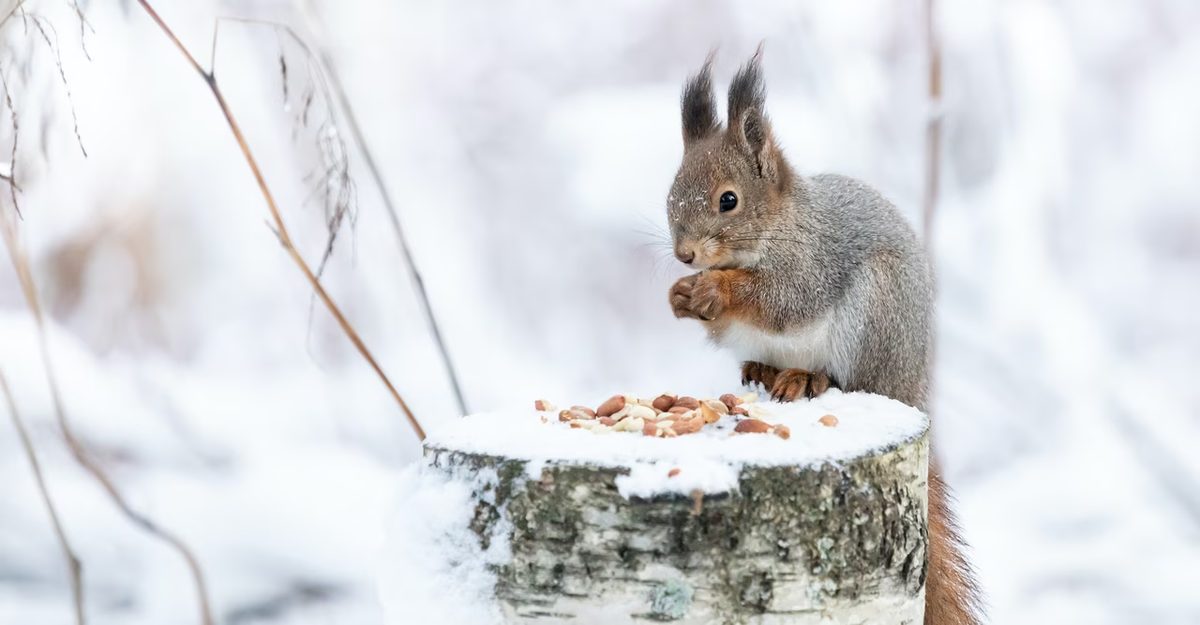
True hibernation is a deep freeze. Metabolism slows to a crawl. Body temperature drops. Only the bare essentials keep the heart beating. It is a state of suspended animation.
Squirrels don’t do this. Not really.
When winter hits, an squirrel’s body temperature plummets. It can drop from a normal 37°C to a frigid 4°C. Heart rate? It slides from 300 beats per minute down to just 9. Scientists call this “torpor” or winter dormancy. It looks like hibernation. It acts like hibernation. But there is a catch.
The Hibernation vs. Torpor Distinction
Hibernating animals like bears, marmots, or bats run on stored fat. They metabolize their own body mass for energy and water while they sleep through the cold months. They don’t eat. They don’t drink. They just burn.
Squirrels don’t stockpile fat for this purpose. They store nuts.
This means they cannot survive on internal reserves alone. They must wake up. Regularly. Every two weeks or so, the squirrel emerges from its torpor. It needs to eat. It digs up cached hazelnuts or seeds. It refills its larder.
But here is the problem.
When a squirrel wakes up, it urinates. It also loses water through evaporation and respiration. It is slowly drying out. Yet, it never feels thirsty.
If it felt thirsty, it would have to leave its shelter. Leaving shelter in winter is dangerous. Predators are waiting. The cold is biting. The squirrel cannot afford to be thirsty.
How does a squirrel suppress the urge to drink while losing water every time it wakes up?
The answer lies in biology, not behavior.
Suppressing the Thirst Mechanism
Most people assume squirrels drink heavily before winter to build up reserves. They don’t. They actually drink less. They enter dormancy with less water, not more.
So how do they ignore the biological signal to drink?
Thirst is triggered by blood concentration. When you are dehydrated, your blood serum becomes too concentrated. Your brain detects this. It screams “drink water.” It is a simple feedback loop.
Squirrels break this loop.
Research from 2019 revealed the trick. Squirrels reduce the concentration of electrolytes in their blood serum. They keep sodium, potassium, and urea levels low. They don’t excrete them. They hide them.
The study suggests squirrels store these excess electrolytes elsewhere in their body. Possibly in the bladder. They are essentially banking their waste products until spring.
By keeping the serum dilute, they keep the thirst signal off. The brain doesn’t detect dehydration because the chemistry looks normal. The squirrel stays dry, safe, and asleep.
Rebooting in Spring
This system is temporary. It is a hack.
When the squirrel finally exits winter dormancy permanently, something has to change. The stored electrolytes are released back into the bloodstream.
Osmolarity returns to normal. The delicate chemical balance shifts. And suddenly, the thirst circuit reactivates.
The squirrel wakes up. It is dehydrated. It needs water. The mechanism that kept it safe all winter now demands fuel.
It is a clever workaround. A biological cheat code. But it only works for a few months. Once the battery runs out, the thirst returns. And with it, the need to venture out into the cold.