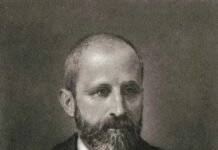
Willard Harrison Bennett didn’t just discover a physical phenomenon. He found a potential key to unlocking the stars here on Earth. Born in Findlay, Ohio, in 1903, this physicist spent his life chasing electrons and high-energy physics. His most famous contribution came in 1934. He identified what we now call the pinch effect.
This isn’t just academic jargon. It is an electromagnetic process that might allow us to trap plasma. We’re talking about temperatures hot enough for controlled nuclear fusion. That is the holy grail of clean energy. Bennett’s work suggested that magnetic fields could squeeze plasma into a stable shape. If we can do this, we might finally achieve sustainable fusion power.
From Classroom to War Room
Bennett’s path wasn’t a straight line. He attended the University of Wisconsin, earning his M.Sc. in 1926. Then he moved to Ohio State University in Columbus. He completed his Ph.D. there in 1928. By 1930, he was teaching at Ohio State.
He stayed until 1938. Then he left academia to become the director of research at the Electronic Research Corporation. The war changed everything. From 1941 to 1945, he served as a U.S. Army officer. He worked on developing aircraft equipment. This wasn’t lab work. It was practical, urgent engineering.
After the war, Bennett shifted gears again. He became chief of the physical electronics section at the National Bureau of Standards in Washington, D.C. He held this role from 1946 to 1950. The government needed his expertise in physical electronics. They got it.
The Naval Consultant and Academic
The 1950s brought new challenges. Bennett served as a consultant for the U.S. Naval Research Laboratory. He worked with them from 1951 to 1961. This period likely involved complex problems in signal processing and sensor technology.
In 1961, he took the Burlington professorship of physics at North Carolina State University in Raleigh. He stayed there until 1976. This was a long tenure. It gave him time to refine his ideas and mentor the next generation of physicists. He died on September 28, 1987.
Beyond the Pinch
The pinch effect is his claim to fame. But Bennett was inventive. He proposed the tandem Van de Graaff accelerator in 1936. This device became widely used in nuclear research. It helped scientists probe the structure of atoms. It remains a staple in physics labs today.
He also invented a radio-frequency mass spectrometer. This tool is used in space research. It helps analyze the composition of cosmic materials. It’s a critical piece of equipment for understanding what’s out there.
His mind was constantly generating new ideas. He received more than 65 patents during his career. That’s a lot of innovation from one person.
Why It Matters Now
We are still chasing the pinch effect. Decades after Bennett’s discovery, scientists are trying to replicate his conditions. Fusion energy promises limitless power without long-lived radioactive waste. It’s a clean alternative to fossil fuels.
The pinch effect offers a way to confine plasma