The green and yellow boxes weren’t just a fleeting Twitter trend. They were the gateway drug to a specific kind of obsessive daily gaming. If you’ve been online lately, you’ve seen them. That indie hit, Wordle, challenges you to crack a five-letter word in six tries. It’s simple. It’s addictive. And now, it has a sibling.
Enter Worldle.
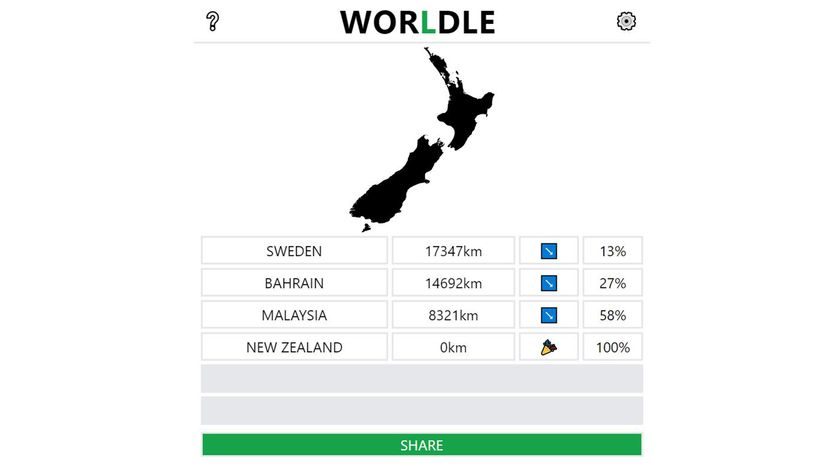
Yes, the naming convention is painfully obvious. The game takes the exact same structural skeleton and applies it to world geography. Instead of letters, you get a silhouette. The shape of a country appears on your screen. You have six guesses to identify it. A dropdown list helps ensure you aren’t misspelling “Colombia” as “Columbia” before you even submit, which is a mercy for those of us who struggle with international orthography.
The Clues Get Specific
When you guess, the game doesn’t just say “wrong.” It gives you three specific data points. It tells you the distance in kilometers from your guess to the correct answer. It tells you the direction the correct country lies relative to your choice. And it gives you a percentage score. 100 percent means you nailed it. Anything less means you’re hunting.
Distances are measured between the geographical centers of countries.
This detail matters. Even if two nations share a border, the game treats them as distant entities. The United States and Canada, for instance, are 2,260 kilometers (1,404 miles) apart in Worldle’s eyes. The math is precise. The geography is literal.
How Worldle Works for Free
The creator is a developer in Montpelier, France. On Twitter, they go by @teuteuf. They aren’t hiding. They openly admit they were inspired by Wordle. In fact, they retweet other Wordle-based geography games, particularly the free indie ones. It’s good citizenship in the dev community.
There is no app. No ads. It is entirely free. You access it via a browser. You can bookmark it or save it to your phone’s home screen to mimic an app experience. The launch date was January 24, 2022. The growth was immediate and violent. By February 13, over half a million people had played. The server load got so heavy that @teuteuf had to switch servers to handle the traffic.
As a daily player, I can confirm the switch happened without a hitch. The game stayed up. The puzzles still loaded. The frustration of missing a guess remained, but at least the site didn’t crash.
Why This Format Wins
These games are modern iterations of Mastermind. The concept is old. The execution is new. The adaptability is the real win. You can swap words for countries. Or numbers. Nerdle handles the digits. Squirdle deals in Pokémon characters. Lewdle… well, Lewdle handles naughty words for adults. It’s NSFW. It’s not for the office.
But Worldle sits in that sweet spot. It’s educational without feeling like homework. It’s competitive without requiring a team. You see a shape. You guess a location. You get feedback. You try again.
There are other quizzes out there too. Can you guess the country from just three images? Maybe. But Worldle forces you to visualize the outline. It forces you to know the scale. It forces you to care about where things are.
The traffic spike was real. The server switch was necessary. The game remains free. And the shapes keep coming.