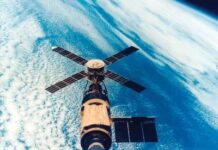
The International Space Station isn’t just a floating hotel for astronauts. It’s a laboratory that runs on a premise Earth simply can’t offer: the absence of gravity.
Experiments up there cover everything from biology to physics. They take advantage of a unique environment to answer questions we can’t resolve below.
Life Sciences on Orbit
One major focus is life sciences. Researchers study how microgravity affects human physiology. They look at plant growth. They track animal development. The goal is straightforward. Understand biological processes better. Improve health for people on the ground.
Materials and Biotech Breakthroughs
Materials science gets a major boost. Scientists investigate metals. Alloys behave differently. Polymers act strangely. This data helps enhance manufacturing processes back home.
Biotechnology also thrives. The lack of gravity allows for the production of highly ordered protein crystals. On Earth, gravity distorts these structures. In space, they form perfectly. Scientists also create materials resembling human tissues. These are difficult to produce on our planet.
“Producing highly ordered protein crystals and materials resembling human tissues, which are difficult to create on Earth.”
Fluids and Fundamental Physics
Fluid physics and combustion science get their own slice of orbital time. Gravity changes how fluids move. It changes how fire burns. Without it, scientists can observe pure dynamics.
Fundamental physics rounds out the list. Theories get tested under conditions impossible on Earth. Why does this matter? It proves models right or wrong. It pushes our understanding of the universe forward.
The ISS remains a hub for discovery. Each experiment adds a piece to a larger puzzle. We are still learning what happens when gravity leaves the equation.