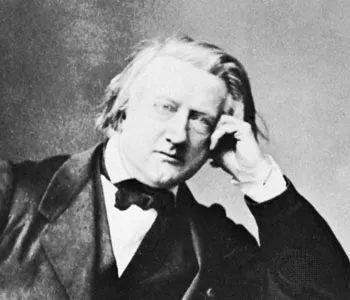
Henri-Victor Regnault didn’t just study science. He fixed it.
Born in Aix-la-Chapelle on July 21, 1810, the French chemist and physicist spent his life chasing precision in a world that often settled for good enough. He died in Auteuil on January 19, 1878, leaving behind a legacy that quietly underpins much of our modern understanding of thermodynamics.
His path wasn’t linear. He studied under Justus von Liebig in Giessen, absorbing the rigorous German approach to chemistry. Then he moved. Fast. He became a professor at the University of Lyon, then jumped to the École Polytechnique in 1840, and finally to the Collège de France in 1841. In 1847, he published his four-volume chemistry work. It was dense. It was thorough.
But the real story isn’t in the textbooks. It’s in the lab.
Correcting Boyle’s Law
Most people know Boyle’s Law. Pressure goes up, volume goes down. Simple. Predictable.
Regnault looked at it and said, “That’s only approximately true.”
He didn’t dismiss the law. He refined it. He proved that no two gases have precisely the same coefficient of expansion. Real gases don’t behave like perfect theoretical models. They have quirks. They have weight. They interact.
This matters. Why? Because if you’re designing a pressurized tank, an engine, or a climate model, assuming ideal gas behavior can lead to errors. Big ones. Regnault showed us where the ideal breaks down. He gave us the data to correct it.
He designed his own apparatus for physical measurements. Not because he didn’t trust existing tools, but because they weren’t precise enough for his standards. He carefully redetermined the specific heats of many solids, liquids, and gases. Specific heat is how much energy it takes to raise the temperature of a substance. Get this wrong, and your thermal engineering is flawed from the start.
The Sèvres Years and Tragic Loss
In 1854, Regnault became the director of the porcelain factory at Sèvres. On paper, this seems like a pivot away from pure research. In practice, it kept him in the thick of material science. Porcelain firing requires exact temperature control. Understanding heat transfer isn’t optional there. It’s survival.
He continued his work in science during these years. He introduced the air thermometer. This wasn’t just a new gadget. It allowed him to determine the absolute expansion of mercury. Mercury expands when heated. But it expands differently depending on the container, the pressure, the history of the glass. Regnault measured it all.
He also devised a hygrometer. A device to measure humidity. Again, precision. Again, real-world application.
Then came the Franco-German War (1870–71). The war didn’t just change borders. It destroyed his laboratory at Sèvres. The physical evidence of his work, gone.
And then his son, Henri, a painter, was killed.
The personal toll was heavy. The professional setback was immediate. But the data had already been published. The corrections to gas