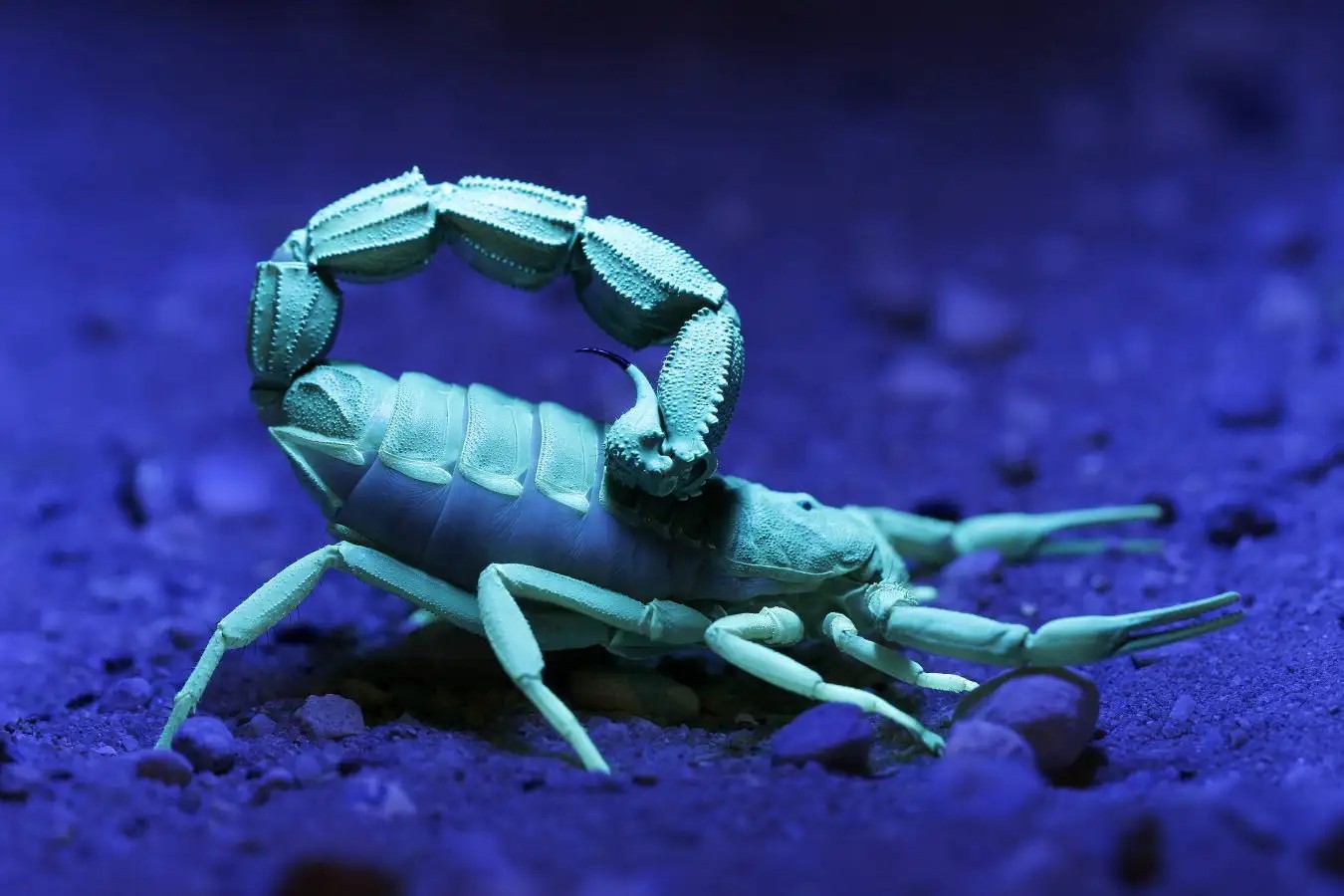
New research has revealed that scorpions possess a biological “superpower”: they reinforce their most critical weapons—their claws and stingers—with metallic elements. This evolutionary adaptation allows these arachnids to harden their tools for combat and hunting, much like a human might use steel-capped boots for protection and durability.
The Anatomy of an Armored Predator
A study led by Sam Campbell at the University of Queensland has mapped the distribution of metals across 18 different scorpion species. By utilizing advanced X-ray techniques and electron microscopy, researchers were able to pinpoint exactly where these minerals are concentrated.
The findings show that metals are not spread evenly across the scorpion’s body. Instead, they are strategically deposited in high-stress areas:
– The tips of the stingers
– The cutting edges of the claws
– The mouthparts and teeth
– The tarsal claws (feet)
While the rest of the scorpion’s exoskeleton remains hard, it is significantly softer than these metal-enriched zones. This concentration ensures that the animal’s primary tools for defense and predation remain sharp and durable without making the entire body too heavy or rigid to move.
A Chemical Toolkit
The researchers identified three primary metals used for reinforcement: iron, zinc, and manganese. They also detected trace amounts of other elements, including copper, nickel, silicon, chlorine, titanium, and bromine.
Interestingly, the study found a clear correlation between a scorpion’s lifestyle and its chemical makeup. The distribution of metals appears to be a specialized response to how a specific species hunts and defends itself:
– Specialized Reinforcement: If a species relies heavily on its claws for grasping prey, it may show higher levels of zinc in those claws.
– Trade-offs in Composition: The team observed a “see-saw” effect; for instance, species with high zinc levels in their claws often had lower zinc levels in their stingers, and vice versa.
This suggests that metal enrichment is a highly targeted evolutionary strategy designed to provide specific biomechanical advantages where they are most needed.
The Mystery of the Source
While the presence of these metals is now well-documented, a significant question remains: How do scorpions acquire these elements?
Scientists suspect that the metals are likely absorbed through their diet, meaning the scorpions extract these minerals from the prey they consume. This would create a biological cycle where the nutrients from one organism are repurposed to build the armor of another.
Why This Matters for Science
This discovery is part of a growing trend in evolutionary biology. Researchers are increasingly finding that animals—including vertebrates like Komodo dragons—incorporate metals into their tissues, such as teeth, to increase strength.
“Metal enrichment in animal tissues appears to be more common than once thought,” notes Aaron LeBlanc of King’s College London.
This study serves as a pioneering step in understanding how these biological “armors” have evolved across different lineages, potentially opening new doors for understanding how life adapts to extreme physical demands.
Conclusion
By strategically embedding metals like iron and zinc into their weapons, scorpions have evolved a highly efficient method of biological reinforcement. This research highlights the sophisticated ways in which nature optimizes physical tools to meet the specific survival needs of different species.