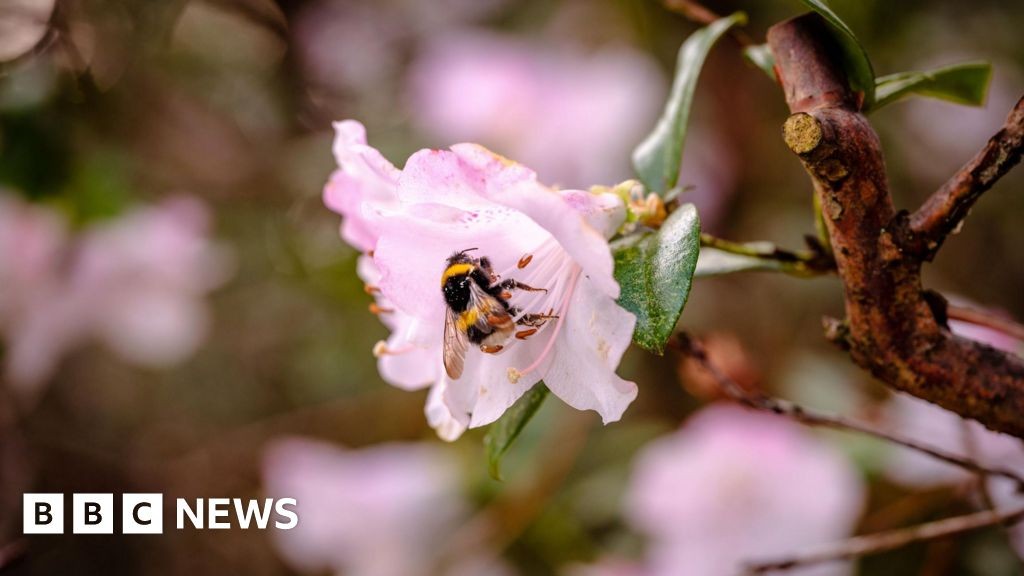
A five-year research initiative at the Wakehurst botanical gardens in West Sussex is challenging traditional conservation methods by shifting the spotlight from wildflower meadows to the vital role of trees in supporting insect populations.
The Mission: Combatting Biodiversity Loss
Launched in 2021 as part of the Nature Unlocked programme, Wakehurst’s research aims to address three interconnected global crises: climate change, nature recovery, and the rapid loss of biodiversity. Central to this mission is the protection of pollinators—including bees, wasps, butterflies, and moths—which are indispensable for both global food security and the maintenance of healthy ecosystems.
While pollinator numbers are declining worldwide, Wakehurst’s recent data provides a glimpse into how targeted habitat management can support high levels of biodiversity.
Shifting the Focus to Arboreal Habitats
Historically, much of the research regarding pollinator support has focused on wildflower meadows. However, Wakehurst researchers are pioneering a different approach by studying the impact of trees.
Janine Griffiths-Lee, pollination research lead, noted that trees serve a critical function by providing essential sources of pollen and nectar much earlier in the season than many flowering plants. This early-season “bridge” is vital for insect survival during the transition from winter to spring.
The effectiveness of this approach is reflected in recent monitoring data:
– Species Diversity: Between March 2023 and October 2025, scientists identified 2,100 insects.
– Bee Populations: The study recorded approximately 110 bee species —a figure that exceeds the total number of bee species found in the entire country of Ireland.
– Moth Populations: The research also identified 90 distinct species of moths.
High-Tech Monitoring: AI and Bioacoustics
To gather this data, Wakehurst is employing cutting-edge technology to observe insects without disturbing their natural behaviors. These methods move beyond manual counting to more sophisticated, continuous monitoring:
- Bioacoustics: Scientists have installed monitors on trees to track insect populations by recording the specific “buzz” frequencies of pollinators.
- AI-Driven Surveillance: A network of 28 cameras uses artificial intelligence algorithms to monitor the foraging behaviors of bees and moths, particularly during nocturnal activity.
- The Wakehurst Ecosystem Observatory (WEO): This new facility allows both professional scientists and “citizen scientists” to study various habitats, including woodlands, meadows, and gardens, fostering a collaborative approach to data collection.
From Research to Urban Application
The goal of this research is not merely academic; it is designed to influence how we build our environments. Wakehurst is actively using its findings to advise housing developers and landscape architects. By identifying which specific plant species are most effective for pollinators, they are helping to integrate “pollinator-friendly” landscapes into urban planning, turning cities into viable corridors for wildlife.
The shift from studying meadows to studying trees, combined with AI-driven monitoring, represents a more holistic way of understanding how insects navigate and survive in changing landscapes.
Conclusion
By leveraging advanced technology and expanding the scope of research to include tree-based habitats, Wakehurst is providing the practical blueprints needed to integrate biodiversity into both rural and urban development.