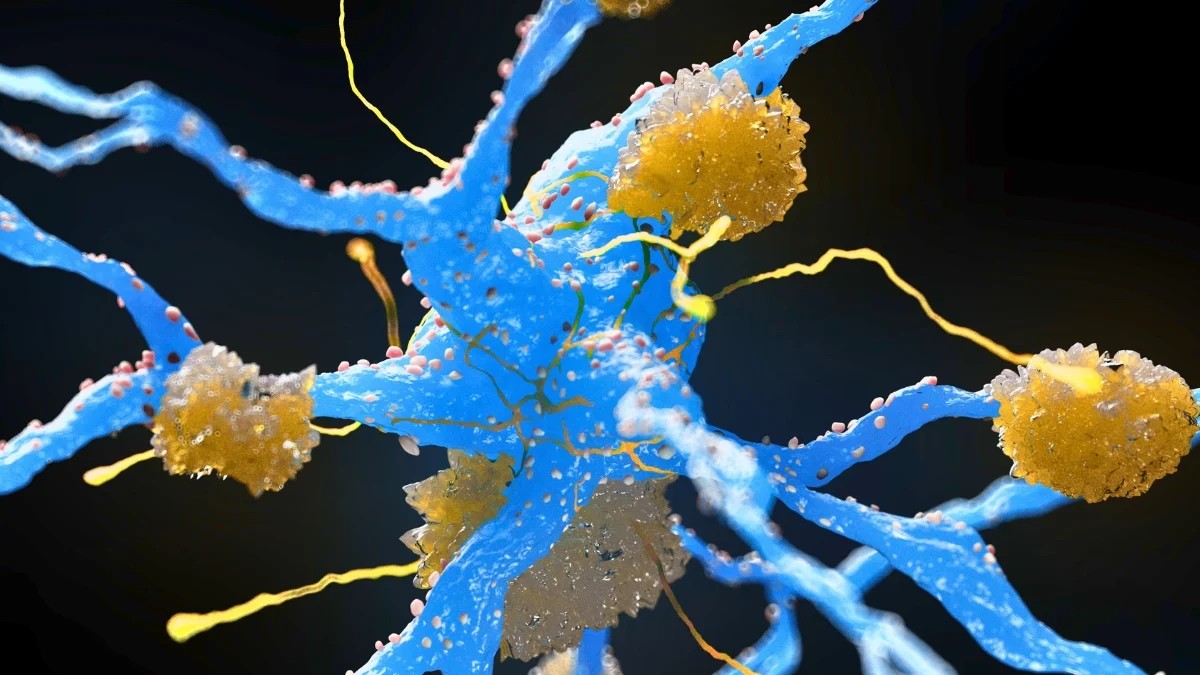
The medical community is discovering that the benefits of GLP-1 receptor agonists—the class of drugs responsible for household names like Ozempic and Wegovy —may extend far beyond weight management and diabetes control. A recent comprehensive review suggests these medications might play a role in slowing the biological hallmarks of Alzheimer’s disease.
The Biological Connection: Proteins and the Brain
Alzheimer’s disease is characterized by the toxic accumulation of two specific proteins in the brain:
– Amyloid-beta: Forms plaques that sit between neurons.
– Tau: Forms tangles inside the neurons themselves.
Both are believed to contribute to the death of brain cells and subsequent cognitive decline. A new review by researchers at Anglia Ruskin University analyzed 30 preclinical studies (conducted on cell cultures and animal models) to see how GLP-1 drugs affect these proteins.
The findings were striking:
– 22 studies showed a reduction in amyloid-beta plaques.
– 19 studies showed a reduction in tau tangles.
How These Drugs Might Work
GLP-1 drugs mimic a natural hormone that regulates insulin, appetite, and digestion. However, the review suggests their impact on the brain may be much more direct. According to physiologist Simon Cork, these drugs may influence Alzheimer’s through several biological pathways:
- Reducing Brain Inflammation: Lowering the neuroinflammation that often accompanies neurodegeneration.
- Improving Insulin Signaling: Enhancing how brain cells process energy.
- Altering Enzyme Activity: Changing the way the body produces amyloid-beta proteins.
Among the four active ingredients studied—semaglutide, liraglutide, exenatide, and dulaglutide —liraglutide appeared to be the most consistent in reducing both protein types back to safe levels.
The Gap Between Lab Results and Human Reality
While the preclinical data is highly encouraging, it is critical to note that this does not yet mean these drugs can treat or prevent Alzheimer’s in humans.
The review included only two small human clinical trials, and their results were inconclusive:
– One trial showed preserved brain cell metabolism.
– Another found reduced amyloid-beta in certain cellular vesicles.
– Crucially, neither trial proved that the drugs could stop cognitive decline or prevent protein buildup in the human brain.
Furthermore, existing research on humans presents a complex picture. While some observational studies suggest that people taking GLP-1 medications have lower rates of dementia, other studies involving patients who already have mild cognitive impairment have shown no significant benefit from semaglutide.
Why the Context Matters: Obesity, Diabetes, and Dementia
A major challenge for researchers is “teasing out” the exact cause-and-effect relationship. There is a known link between obesity, type 2 diabetes, and dementia risk. Because GLP-1 drugs treat both obesity and diabetes, it is difficult to determine if the drugs are protecting the brain directly, or if they are simply reducing dementia risk by improving general metabolic health.
“The current evidence points towards these drugs having a preventative effect, rather than [working in] patients with established cognitive impairment.” — Simon Cork, Physiologist
The Path Forward
The scientific consensus is shifting toward viewing GLP-1 drugs as potential candidates for prevention rather than a cure for those already suffering from advanced Alzheimer’s. The next vital step is the transition from animal models to large-scale, human clinical trials to see if these biological changes actually result in preserved memory and cognitive function.
Conclusion: While preclinical evidence strongly suggests that GLP-1 drugs can reduce the toxic proteins associated with Alzheimer’s, large-scale human trials are still required to confirm if these medications can truly prevent dementia in people.