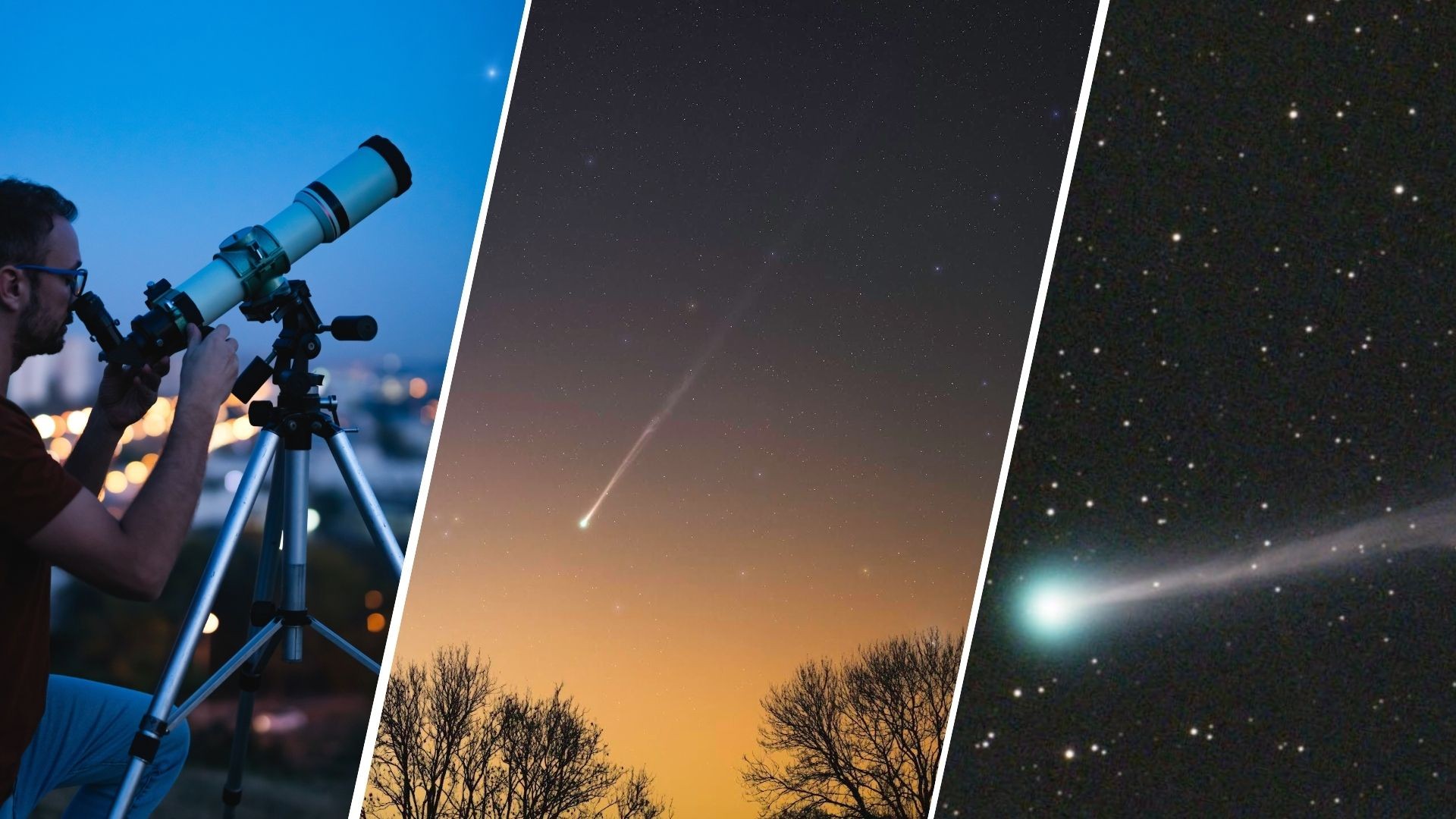
Tonight offers a fleeting opportunity to witness a rare astronomical phenomenon: the passing of Comet C/2025 R3 (PanSTARRS). This icy wanderer is making its final, brilliant appearance in the Northern Hemisphere before it moves toward the sun and disappears from our view for generations.
The Window of Opportunity
To catch this “once-in-a-lifetime” event, timing and location are critical. Because the comet is moving rapidly toward the sun, its visibility window is closing fast.
- When to look: The predawn hours of April 17. Aim to be in position at least 90 minutes before sunrise.
- Where to look: Seek out a location away from city light pollution with a clear, unobstructed view of the eastern horizon.
- How to find it:
- Locate the Great Square of Pegasus, a prominent constellation of four bright stars.
- Find the lowest star in the square, known as Algenib.
- Look approximately five degrees above Algenib. A helpful trick is to hold your hand at arm’s length; the comet should be roughly the width of your three middle fingers above that star.
Understanding the Comet’s Brilliance
Astronomers measure the brightness of celestial objects using magnitude. In this scale, lower numbers indicate brighter objects.
Currently, Comet PanSTARRS has reached an estimated magnitude of +4.7. For context, the human eye can see objects as dim as +6.5 under perfect conditions. This means that in a dark sky, the comet should appear as a visible, small blur of light even without specialized equipment.
Pro-tips for observers:
– Binoculars: Using 10×50 binoculars will help you clearly resolve the comet’s glowing nucleus.
– Photography: If you are an astrophotographer, use long-exposure settings to capture the intricate details of the tail, which is being shaped by the solar wind.
Why This Matters: A Final Farewell
The comet is currently racing toward its perihelion —its closest approach to the sun—scheduled for the night of April 19. While this approach will cause the comet to brighten further, it also means the comet is moving into the overwhelming glare of the sun.
This event is part of a predictable but rare orbital cycle. As the comet passes the sun, it will transition from the Northern Hemisphere to the Southern Hemisphere, traveling through constellations such as Pisces, Cetus, and Orion. Once it completes this arc, it will retreat into the outer reaches of the solar system, never to be seen again in our lifetimes.
Summary: Comet PanSTARRS provides a rare, naked-eye viewing opportunity on the morning of April 17; observers should look toward the eastern horizon near the Great Square of Pegasus before the comet vanishes into the sun’s glare.