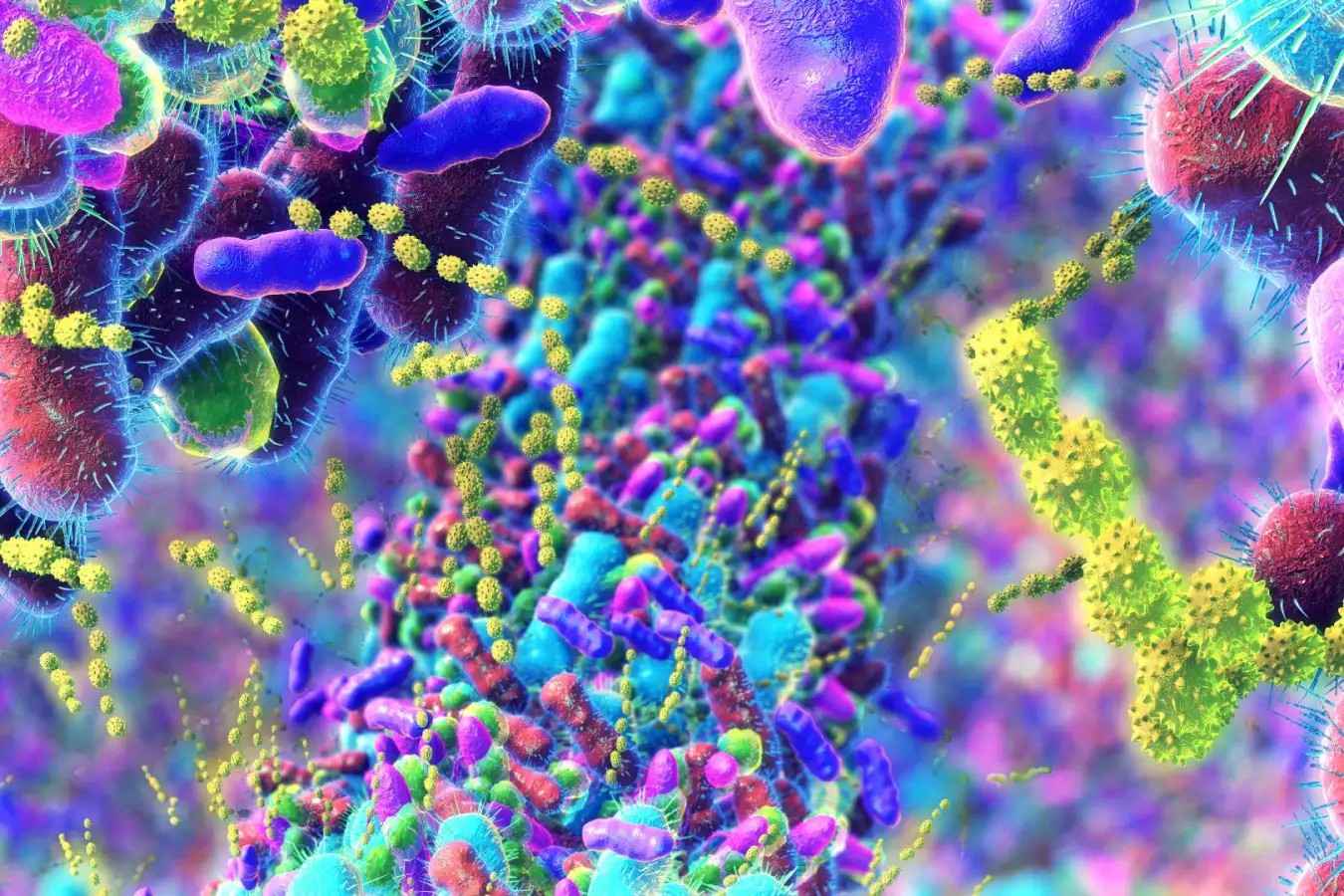
New research suggests that the way we live—specifically our transition to industrialized, urban environments—may be fundamentally changing how our bodies manage sex hormones. A study led by researchers at Jagiellonian University Medical College has found that people in industrialized societies possess gut bacteria capable of recycling hormones at much higher rates than hunter-gatherers or rural farmers.
The Mechanism of Hormone Recycling
To understand this phenomenon, it is necessary to look at how the body processes hormones like oestrogen.
When hormone levels in the blood become too high, the liver attaches a chemical “tag”—a sugar molecule—to the hormone. This tag marks the hormone for excretion, allowing it to be eliminated through the gut. However, certain bacteria in the digestive tract possess specific enzymes called beta-glucuronidases. These enzymes can strip the sugar tag away from the hormone.
Once the tag is removed, the hormone is no longer marked for excretion; instead, it can be reabsorbed through the intestinal wall and sent back into the bloodstream. This process creates a loop where hormones that were meant to be discarded are “recycled” back into the body.
The Rise of the “Oestrobolome”
This specialized collection of gut bacteria that manages oestrogen is known as the oestrobolome. Scientists have also recently proposed the term “testobolome” to describe the gut microbes that influence testosterone levels.
By analyzing genetic sequences from hundreds of people across 24 different global populations, researchers compared the “recycling capacity” of these microbes. The findings revealed a stark divide between lifestyles:
- Industrialized Populations: People living in urban areas (such as those in Philadelphia or Colorado) showed an oestrogen-recycling capacity up to seven times greater than hunter-gatherers or rural farmers. Their microbial diversity in this area was also twice as high.
- Dietary Influences: The study noted a significant impact of early-life nutrition. Babies fed formula showed up to three times the recycling capacity and 11 times the diversity found in breastfed infants.
- Constants: Interestingly, factors such as age, sex, and BMI did not appear to influence the composition of the oestrobolome.
Why This Matters for Human Health
The ability to recycle hormones is a double-edged sword. The implications for long-term health are profound, though researchers are still working to confirm if these genetic sequences directly result in higher blood hormone levels.
“The assumption is usually that higher oestrogen recycling is harmful,” says researcher Rebecca Brittain. “I don’t think that’s a fair assumption. For some people with really low oestrogen levels, this could be a good thing.”
Potential Risks and Benefits:
– Health Risks: If urban living leads to chronically elevated oestrogen levels, it could potentially increase the risk of certain hormone-sensitive cancers, such as breast cancer.
– Potential Benefits: For individuals suffering from naturally low hormone levels, a highly active oestrobolome might provide a necessary physiological boost.
Limitations and Next Steps
While the study provides a compelling link between industrialization and hormonal regulation, experts note certain limitations. For instance, the industrialized cohorts studied were all located in the United States, meaning further research in Europe and other regions is needed to confirm if these trends are universal to all industrialized nations.
Moving forward, the research team intends to launch new studies to identify the specific lifestyle factors—such as diet, sanitation, or environmental exposure—that drive these microbial differences.
Conclusion
The study highlights a critical connection between our modern environment and our internal biochemistry, suggesting that urban living may inadvertently alter our hormonal balance through the gut microbiome. Understanding this link is a vital step in uncovering how lifestyle impacts long-term disease risk and hormonal health.