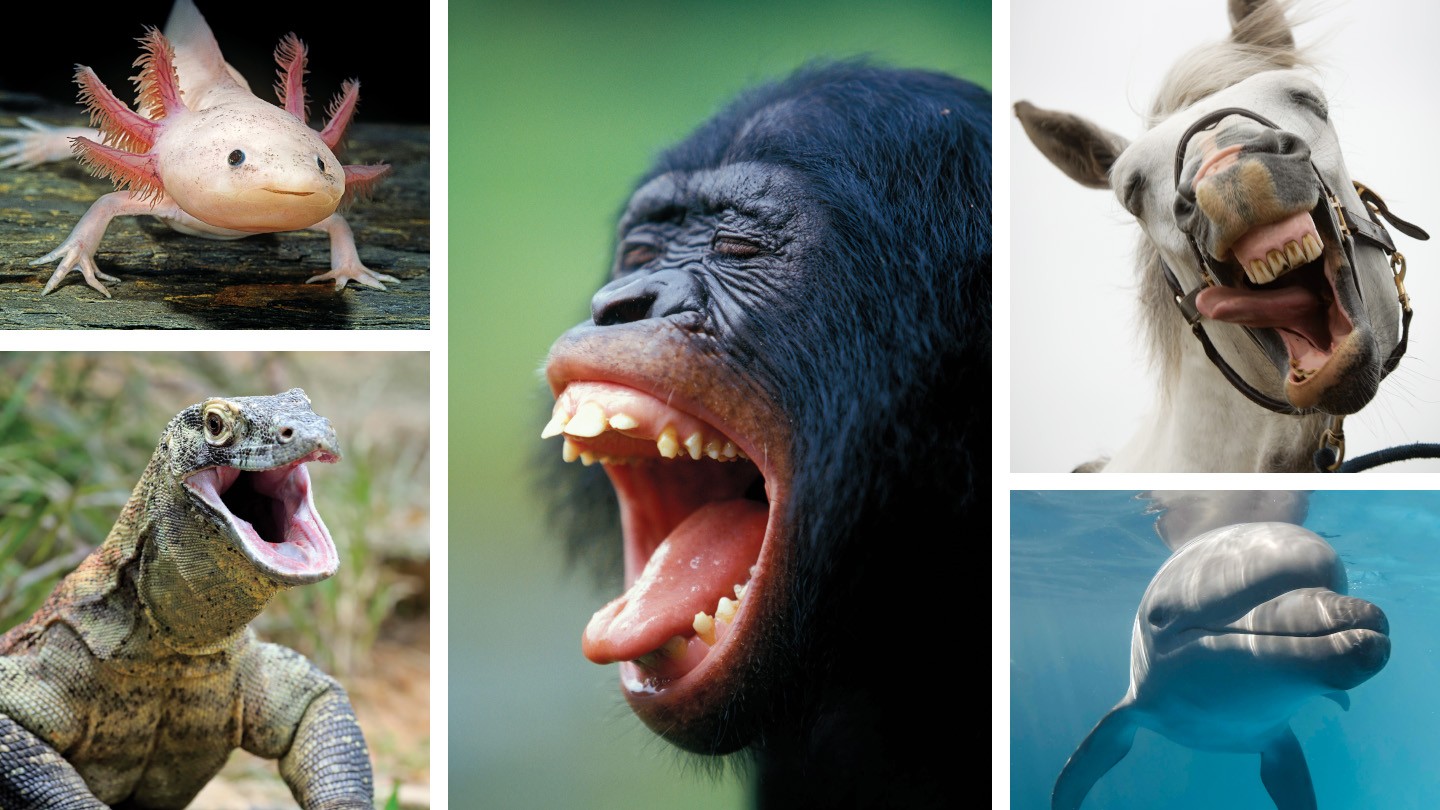
For decades, the scientific community has largely ignored the question of whether nonhuman animals experience joy. Researchers have been cautious, wary of anthropomorphism —the tendency to attribute human emotions to animals—and have struggled to measure subjective feelings like happiness. While we might see a dog romping in a park or a cat purring and assume they are happy, these behaviors can often be misinterpreted. A squirrel chasing another might be playing, or it might be defending territory.
This gap in understanding is changing. A new, bold collaborative effort is underway to develop a “joy-o-meter,” a standardized set of tests designed to measure positive emotions in animals. The goal is not just to satisfy curiosity, but to improve the mental health and well-being of captive animals by providing concrete tools to assess their happiness.
Defining the Undefinable
The project, led by cognitive scientist Erica Cartmill at Indiana University Bloomington, brings together experts studying great apes, dolphins, and parrots. The primary challenge? Defining joy in a way that is scientifically rigorous.
Philosopher Colin Allen from the University of California, Santa Barbara, explains that studying emotions is inherently difficult. To make progress, the team adopted a strict definition: joy is an intense, brief, positive emotion triggered by a specific event, such as receiving favorite food or reuniting with a companion.
“You want to make sure that what you’re putting out there is based on reality, as opposed to just guessing what is happening in the animal’s mind,” says Heidi Lyn, a comparative psychologist at the University of South Alabama.
This approach moves beyond anecdotal observation, aiming to establish a serious scientific framework for positive affect that rivals the rigor used to study pain and negative emotions.
Apes: Laughter, Optimism, and Windfalls
The research began with great apes, our closest evolutionary relatives. Primatologist Gal Badihi observed wild chimpanzees in Senegal and noted rare but distinct moments of joy, such as infants hanging upside down or young chimps rolling around while making panting sounds similar to human laughter. These vocalizations often served to communicate positive intent or resolve conflict, much like human smiles.
In captivity, researchers have used clever experiments to trigger and measure joy:
- The Optimism Test: Sasha Winkler trained bonobos to expect grapes from a black box and nothing from a white box. When presented with a neutral gray box, bonobos that had just heard recordings of baby bonobo laughter were significantly more likely to investigate it. This suggests the sound of laughter induced an optimistic, positive state.
- The Windfall Experiment: Heidi Lyn tested bonobos by hiding grapes in a predictable manner, then introducing a “magic trick” where a hidden container revealed a jackpot of ten grapes. The bonobos responded with specific vocalizations (“food peeps”) and head nods, indicating surprise and delight.
- Social Surprises: Similar “windfall” tests using video calls with familiar keepers elicited the same joyful responses, suggesting these behaviors are not just about food, but social connection.
Parrots: Snowballs and Warble Calls
The study expanded to keas, intelligent parrots native to New Zealand. Behavioral biologist Ximena Nelson has long suspected keas experience joy, noting their playful behavior in snowy weather, such as making snowballs and sledding down roofs.
Previous research showed that keas make contagious “warble calls” during play. Nelson and zoologist Alex Grabham attempted to use these calls as a joy trigger for captive keas. However, the captive birds had never heard warbles and reacted with distress.
Adjusting their approach, the team used food-based windfalls. After feeding the keas mundane carrots, they introduced a surprise of peanut butter. The researchers are now analyzing biological markers, such as body temperature changes, to correlate with these positive experiences. This is crucial because, as expert Sergio Pellis notes, outward behavior can be misleading; for instance, high cortisol levels in playing dogs may indicate stress rather than fun.
Dolphins: Beyond the Frozen Smile
Dolphins are often perceived as joyful due to their leaping and “smiling” faces, but their smiles are anatomical structures that do not reflect emotion. Furthermore, dolphins can be violent, and their play can sometimes involve aggressive interactions with other species.
Heidi Lyn’s team investigated how captive dolphins respond to enrichment items. In a 2020 study, dolphins initially fled from new objects like bubble generators but showed interest in a large block of ice. More promisingly, researchers identified a “victory squeal,” a vocalization linked to dopamine release.
Dolphins make this sound when they receive a reward, but also before receiving it after completing a task, akin to saying, “Yay, I did it!” The team is now exploring whether these squeals increase during unexpected positive events, such as receiving a favorite toy, and whether they are amplified when trainers or other dolphins are also exhibiting joyful behavior.
Why This Matters
The development of a joy-o-meter is more than an academic exercise. It provides a critical tool for assessing the welfare of animals in zoos, aquariums, and sanctuaries. By moving beyond subjective interpretation and identifying biological and behavioral markers of positive emotion, scientists can ensure that enrichment programs genuinely improve animal well-being.
While challenges remain—individual animals vary greatly in their responses, and no single test fits all species—the progress made so far is significant. As Ximena Nelson notes, despite the difficulties, the team has made substantial strides in understanding the complex inner lives of animals.
Conclusion
The scientific quest to measure animal joy is transforming how we view the emotional lives of nonhuman species. By combining strict definitions, innovative experiments, and biological markers, researchers are building a robust framework to identify happiness across diverse animals. This work not only deepens our understanding of the natural world but also offers practical tools to enhance the quality of life for animals in human care.