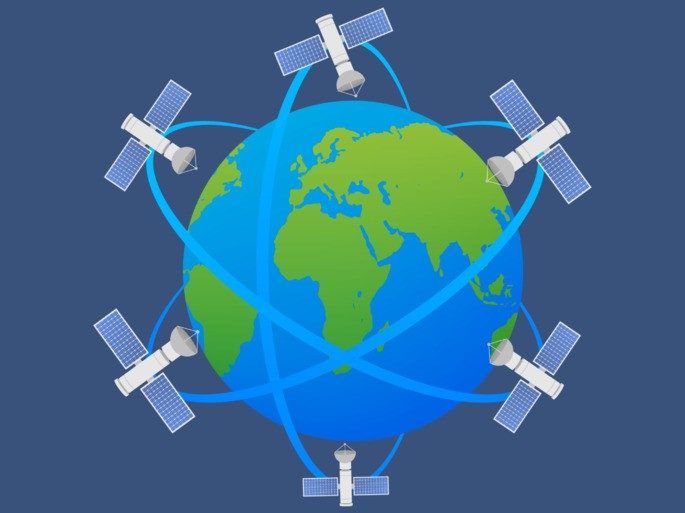
Most people picture space travel as a series of perfect circles. Think of cartoon planets spinning around stars in tidy, symmetrical rings. It’s clean. It’s simple. It’s also wrong.
Real orbits are stretched out. They are ellipses.
This isn’t just a geometric quirk. It’s the fundamental rule of how gravity works in our universe. When an object moves under the influence of a central force—like gravity pulling on a planet—it doesn’t trace a circle. It traces an elongated loop called an ellipse. And understanding this shape explains why seasons change, why spacecraft need precise timing, and why the night sky looks the way it does.
The Kepler Discovery
Johannes Kepler figured this out in the early 1600s. Before him, astronomers like Ptolemy and even Copernicus assumed celestial bodies moved in perfect circles. It was a philosophical preference for perfection. Nature didn’t care about perfection.
Kepler looked at the data. Specifically, the incredibly precise observations of Mars made by his mentor, Tycho Brahe. The math didn’t fit a circle. It fit an ellipse.
An ellipse has two focal points. In a solar system, the star sits at one focus. The planet travels around the other, staying in a closed loop. This is the core of Kepler’s First Law of Planetary Motion. It’s not a suggestion. It’s the geometry of gravity.
Speed Matters More Than You Think
Here is where it gets interesting. If you are in an elliptical orbit, your speed is not constant.
When a planet is closest to the sun, it zooms. This point is called the perihelion. The gravity is stronger, the pull is tighter, and the object accelerates. When it swings out to the farthest point—the aphelion—it slows down. Dragged by distance and weaker gravitational pull, it crawls.
This isn’t just academic trivia. It affects everything.
- Climate cycles: The variation in distance between Earth and the Sun contributes to seasonal differences, though tilt is the bigger factor.
- Space missions: Rockets don’t just launch up. They launch into specific elliptical transfer orbits. Getting the timing wrong means missing the target planet by millions of miles.
- Satellite communication: Satellites in elliptical orbits spend more time over certain parts of the Earth. This is useful for high-latitude coverage but tricky for consistent signal strength.
Why This Matters Today
We still use Kepler’s laws. And Newton’s later refinement of universal gravitation, which explained why the ellipses happen. The force of gravity weakens with distance squared. That inverse-square law is what creates the elliptical shape when combined with an object’s forward momentum.
Without this understanding, we couldn’t navigate. We couldn’t predict eclipses with accuracy. We couldn’t send probes to Jupiter or Mars.
The next time you look at a diagram of the solar system, imagine the circles stretching. Elongating. The planets aren’t dancing in a circle. They’re swinging like a pendulum across the void, speeding up and slowing down in a rhythm set by gravity’s pull.
It’s messy. It’s complex. It’s how the universe actually works. And it’s
Why Planets and Satellites Don’t Trace Perfect Circles
Gravity doesn’t do perfect circles. It does ellipses. You see this shape everywhere in space because it is the natural result of objects pulling on each other across vast distances. The Earth isn’t spinning around the Sun in a ring. It is tracing a slightly flattened oval. This applies to moons circling Jupiter, asteroids drifting through the belt, and even the artificial satellites we launch from the ground.
The shape of that ellipse depends on speed and gravity. If the force is strong and the speed is just right, you get a tight loop. If the speed changes or the pull varies, the path stretches. That stretching creates the ellipse.
Comets: The Extreme Case
If planetary orbits are mild ellipses, comets are extreme ones. Their paths are so elongated that they spend most of their time in the freezing dark of the outer solar system. Then, for a brief window, they swing close to the Sun. Heat vaporizes their ice, creating that iconic tail. After that close pass, they fling themselves back out into the void. This is why we don’t see Halley’s Comet every year. It is stuck in a very long, very narrow ellipse.
Artificial Satellites and Orbital Purpose
Engineers choose elliptical orbits for specific reasons. A circular orbit keeps a satellite at a constant altitude, which is great for earth observation or GPS. But an elliptical orbit allows a satellite to hover longer over a specific region of the planet. It dips low for detailed data, then rises high to rest, before diving back down. The shape serves the mission.
How Elliptical Motion Differs from Circular Motion
The difference comes down to geometry and focus. A circular path has one center point. Every point on the edge is the exact same distance from that center. It is static in its distance.
An elliptical path has two focal points. The object in motion is always at a different distance from the center as it travels. It gets closer (perigee) and further away (apogee) in a continuous cycle. The two foci define the shape’s stretch.
A circle is just an ellipse where the two foci have merged into a single point.
This means circular motion is not a separate category. It is a special case of elliptical motion. When the eccentricity drops to zero, the ellipse becomes a circle. But in the real world, zero eccentricity is rare. Almost everything in motion is adjusting to forces that make its path slightly oval.
Kepler’s Laws and Real-World Applications
Johannes Kepler figured this out by looking at Mars. He realized that assuming a circle led to errors in prediction. Only by accepting the ellipse did the math match the sky. His laws still govern how we navigate spacecraft today.
Understanding this distinction matters for navigation. If you assume a circular orbit, your calculations for fuel and timing will be off. The variation in distance changes the gravitational pull. It changes the speed. Ignoring the ellipse means missing the target.