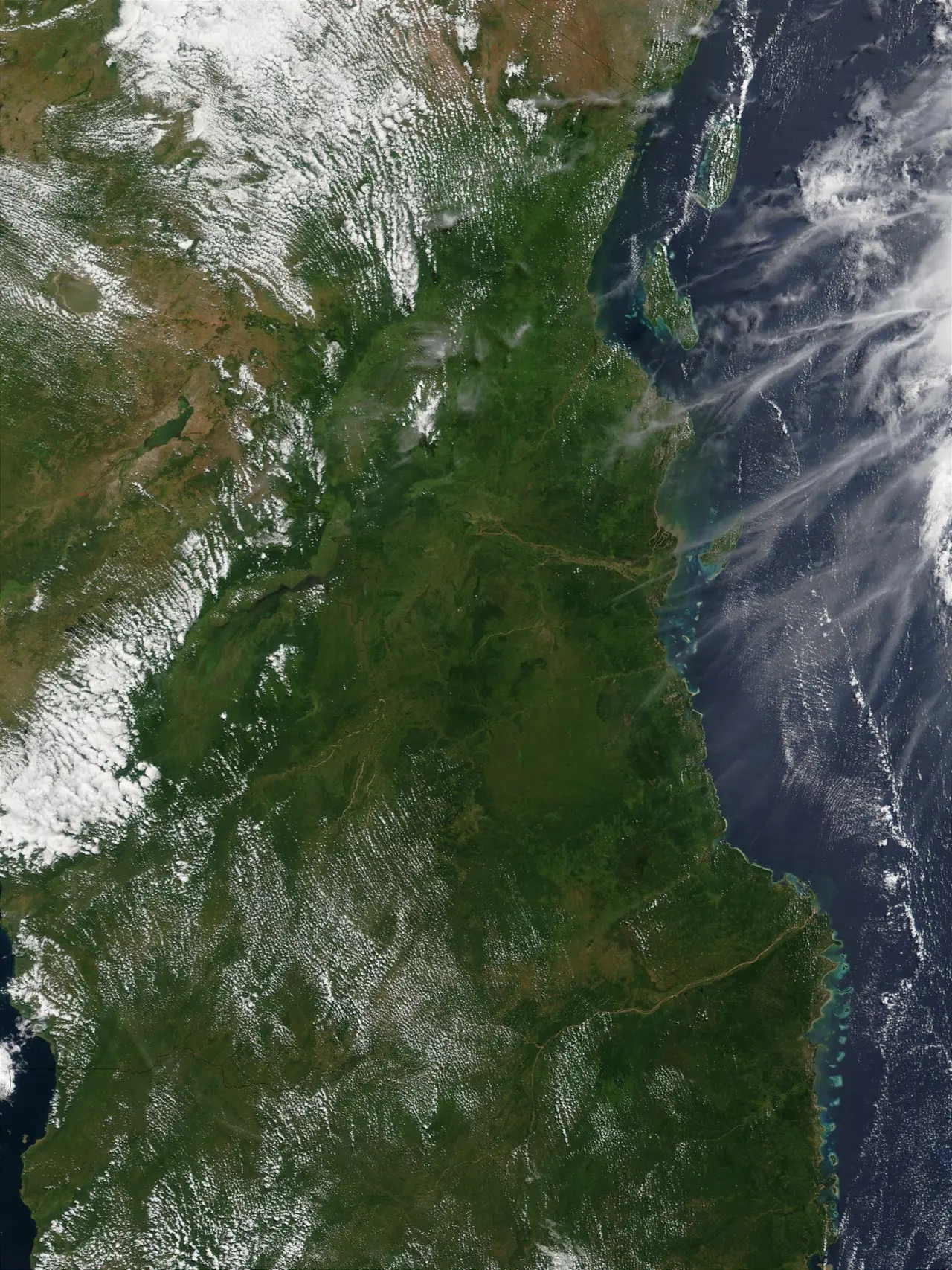
Thomas Pesquet is back in the news, but this time he isn’t talking about zero-gravity experiments or the International Space Station. He is taking us to Tanzania.
A new photo captured from orbit shows more than just clouds and terrain. It reveals a complex web of water bodies, some vibrant, some dangerous, and one that holds billions of dollars in rare gas. For space enthusiasts, these shots are pretty. For geologists and economists, they are a map of hidden resources.
The French astronaut’s lens highlights four specific lakes in Tanzania. Each tells a different story about how water shapes this part of the African continent.
The Sediment Plumes of Lake Mtera
Lake Mtera sits in the central plateau of Tanzania. It is not the most famous lake in the region, but its hydrology is distinct. Three rivers feed into it: the Mpera, the Fufu, and the Kisigo.
From space, you can see the Kisigo river mouth clearly. The water there is not blue. It is brown and cloudy. This is because it carries heavy loads of sediment. The contrast against the surrounding land makes the river’s path obvious even from hundreds of kilometers up. It is a reminder that water is never just H2O. It is a transport vehicle for soil and rock.
The Toxic Beauty of Lake Natron
Travel north, and the water changes character entirely. Lake Natron is one of the most hostile environments on Earth.
The temperature here can hit 60°C. That is hot enough to cook. The pH is 10.5. That is extremely basic, similar to bleach. The salinity is also high. Most birds that try to land here do not survive. The lake kills them.
So why is it beautiful?
The red and pink hues are not pollution. They are caused by halophilic microorganisms. These salt-loving microbes thrive in the extreme conditions. They turn the water a vibrant shade of rose. It is a lethal landscape that happens to be visually striking.
The Billion-Dollar Gas Reserve in Lake Rukwa
South of the central plateau lies Lake Rukwa. This lake looks unremarkable from the surface. It does not boil. It is not brightly colored.
But beneath the water, something valuable rests.
In 2016, scientists estimated that Lake Rukwa holds 1.53 billion cubic meters of helium. Helium is not just for party balloons. It is essential for MRI machines, fiber optic cables, and space exploration. The value of this reserve? Approximately $3.5 billion.
This discovery shifts the lake’s importance. It is no longer just a body of water. It is a strategic energy resource. The location of the helium suggests deep geological activity beneath the crust. It explains why the gas is trapped there in such large quantities.
The Disappearing Act of Lake Sulunga
Lake Sulunga sits near Lake Mtera. It follows a different rhythm.
During normal years, it holds water. During drought years, it vanishes. The lake can disappear completely. This makes it a volatile landmark. For local communities, its presence or absence dictates survival. For satellite imagery, it is a challenge. You have to know when to look, because sometimes the lake is just dry
There’s a strange irony in how we consume science news. We want the breakthroughs. The clean, viral-ready headlines about quantum leaps or Mars landings. But the actual mechanism of discovery is often messy, iterative, and deeply unglamorous. So we outsource our curiosity. We follow channels. We tap buttons.
Futura Science has pushed this model hard. They aren’t just aggregating content. They’re building a pipeline.
Take WhatsApp. It’s not a news site. It’s a chat app. But by placing Futura there, they’re inserting science directly into the private, high-trust spaces where we already spend our time. No click. No banner ad. Just a message.
Then there’s Google News. The algorithmic beast. It doesn’t care about brand loyalty. It cares about relevance. If Futura’s coverage on AI ethics or climate tech matches what you’re searching for, it surfaces. It’s a match between intent and information. Fast. Efficient. Cold.
Why does this matter? Because science communication is fragmenting. The old model — a single magazine, a weekly issue, a static website — is dead. It’s been replaced by a network. A presence. Wherever you are.
If you’re on WhatsApp, you get the digest. If you’re on Google, you get the search result. The story is the same. The delivery is different. The goal is constant: don’t let the news pass you by.
It’s a simple strategy. But it works because it meets people where they already are. We don’t always go to the source anymore. We let the source come to us.