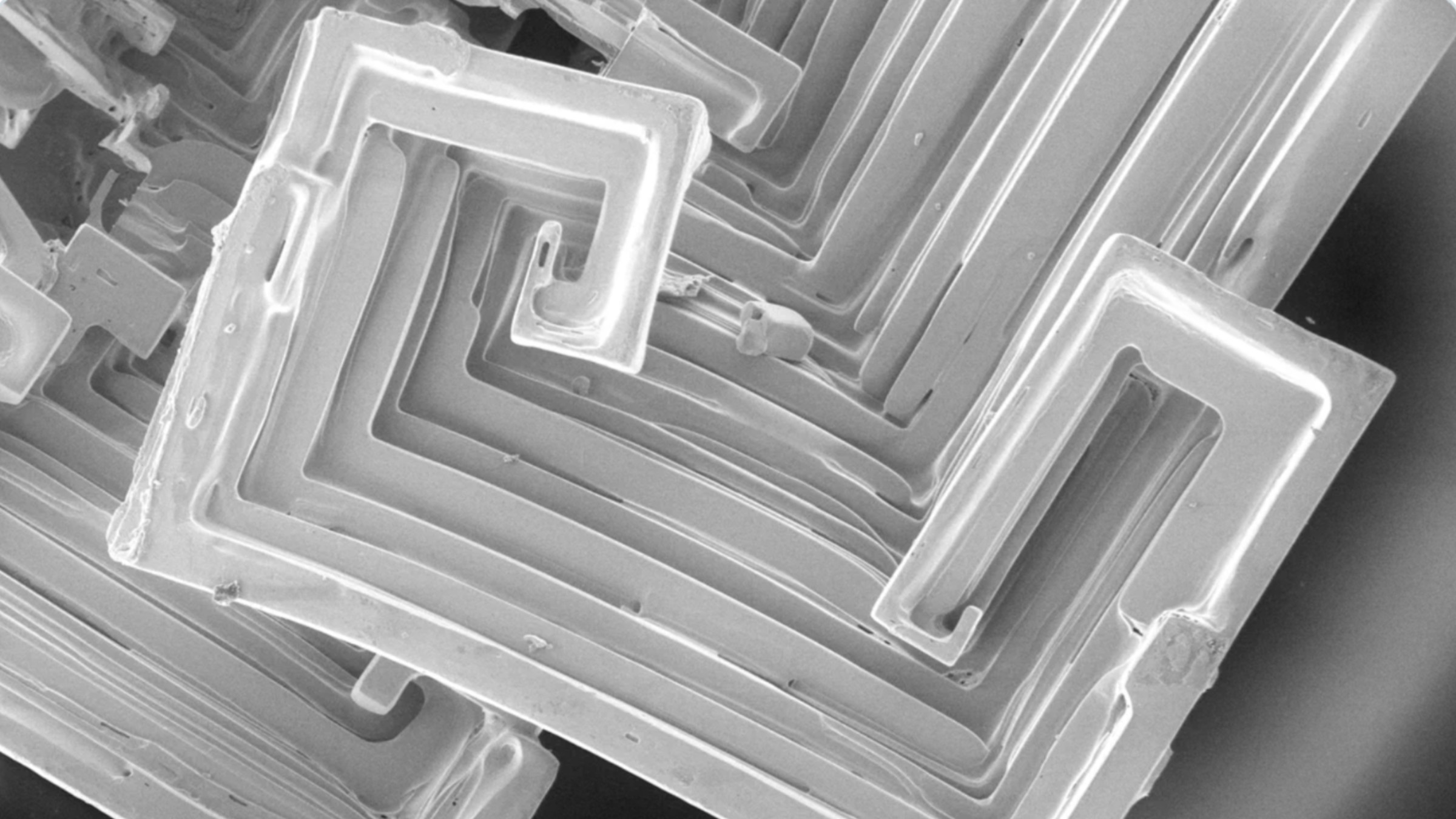
Look at that pyramid. It curls. It steps down into its own center.
It looks like a computer rendering from a sci-fi movie. It isn’t one. It is potassium chloride. A common salt. The kind you might sprinkle on your fries if you are trying to cut sodium. But this version? This version is alien.
NASA astronaut Don Pettit shared this image on July 18. It went viral for good reason. It defies intuition. On Earth, things settle. Gravity pulls them down. They sag. They break. In orbit, those rules vanish.
The physics of ‘hopper growth’
This isn’t just cool visuals. It is physics rewriting itself.
The crystals grew aboard the International Space Station. They experienced microgravity. That is a specific condition. It is not zero gravity. There is still pull. It is just roughly a million times weaker than what we feel on the ground. Professor Anne Wilson of Butler University explains it simply: when gravity steps back, other forces take the wheel.
Molecular attraction. Polarity. Suddenly, these matter.
“[Other] forces start to become far more more pronounced than gravity forces.”
Potassium chloride normally forms cubes. Simple geometry. But microgravity changes the growth mechanics. The crystals do not grow across their faces evenly. They grow from the edges. The corners.
The center stays hollow.
This specific pattern has a name. Hopper growth. It creates that stair-stepped, hollow pyramid look. It is not unique to potassium chloride. Ordinary table salt does it too. But seeing it? Seeing the elegant scroll of the crystal as it shifts direction? That is rare.
Why this matters beyond Instagram
Let’s be clear. This isn’t just a pretty picture for the science feed.
Defects are the enemy of high-tech manufacturing. Semiconductors. Advanced materials. On Earth, gravity interferes. It creates imperfections. It pulls structures out of alignment.
In space, crystals grow with fewer defects. Closer to the “ideal” structure. Researchers are watching. They want to know how to replicate those perfect forms back here. Better chips. Stronger materials. More efficient manufacturing.
The insight from these “hopper crystals” could refine how we build the future. Literally.
Why watch your salts float?
Wilson put it best.
“I love seeing videos of how things behave in.space,” she said. “Who would think that something as simple as potashium chloride could still be super cool?”
It is.
We take gravity for granted. We build our entire world based on things falling down. When you remove that force, you get unexpected shapes. You get art. You get science.
The ISS orbits overhead. The crystals are still growing. The image is static. The process is not.
What else are we missing because we are too heavy to see?