Measles is back. And this time, the old safeguards aren’t holding up.
Cases in the United States have spiked to levels unseen since the early 1990s. The stakes? The nation’s hard-won measles elimination status could vanish.
We got it right at the turn of the millennium. Decades of relentless public health work drove the virus into hiding.
“We eliminated measles in 2000… It was a huge win,” Jessica Steier, founder of UnbiasedScience, told ScienceAlert.
Then the progress started to rot.
Measles elimination vs. eradation
Let’s get one thing clear: elimination is not eradication.
Elimination means the virus isn’t spreading freely in a specific geographic area for over 12 months. Relentless surveillance is the glue. You still see imported cases — always a plane flight away. But the chain of transmission breaks before it can spark.
The US recertified this status in 2011. No review has happened since.
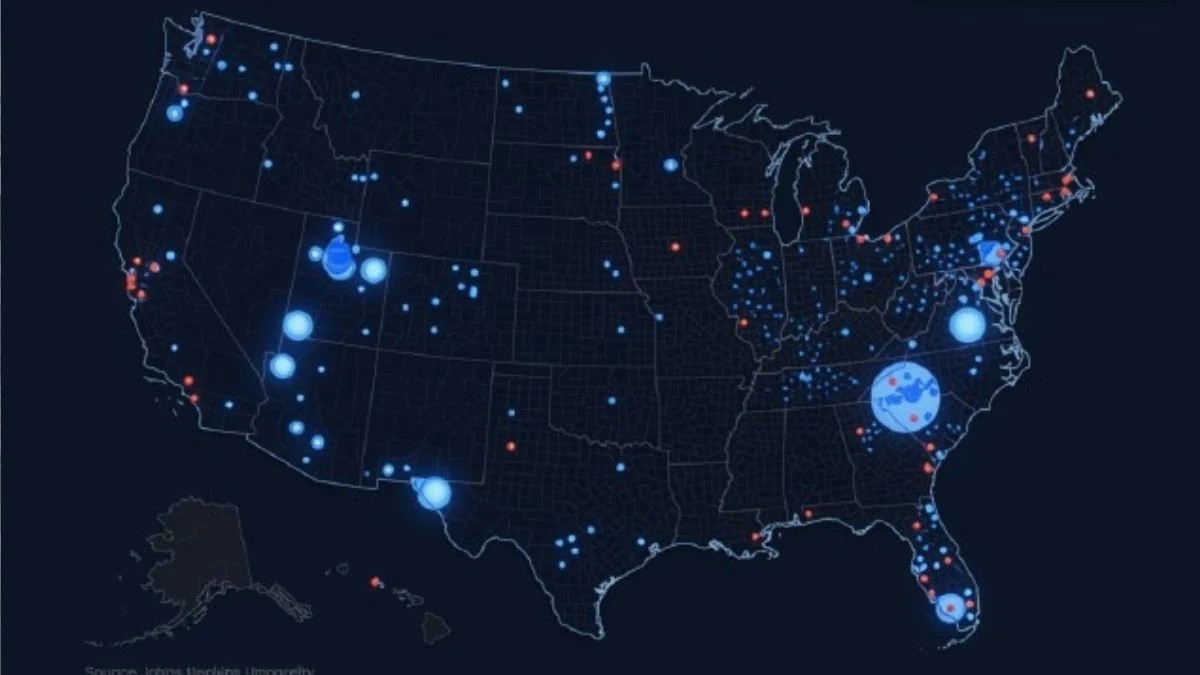
Now, Johns Hopkins University’s tracking team shows the landscape has shifted. Out of 2,295 cases this year, most weren’t imported. They were acquired locally. Inside the borders. Within the states.
The virus is finding purchase again.
The 95% threshold myth
National averages lie. They smooth over the cracks.
Lauren Gardner, data scientist and JHU measles tracking team member, sees it clearly. The decline in measles, mumps, rubella (MMR) vaccination coverage is geographically clustered.
You can look at a state map and see green — above the threshold. But zoom in.
The counties below are where the real danger lives.
“A state that sits comfortably above threshold may contain communities well below it, which is where risk of outbreaks really lies.” – Lauren Gardner
Herd immunity for measles requires MMR coverage above 95%. Not 80%. Not 90%. 95%.
Hundreds of US communities have fallen below this line. Unvaccinated individuals are contracting the disease at dramatically higher rates. The data doesn’t argue. It just shows the body count.
Will the US lose its status?
Experts are calling it.
A paper in The Lancet from Boston Children’s Hospital and Harvard Medical School suggests losing measles elimination status is “highly likely” by 2026.
The Pan American Health Organization plans to review the status this November. But the data is already written in the infections.
The driver is simple: declining MMR coverage.
How to stop the spread
It’s not just about numbers. It’s about access and trust.
States are expanding exemptions. School vaccination requirements are shifting. Public health agencies are understaffed and underfunded, struggling to track outbreaks with the speed required to shut them down.
Misinformation fills the void. Social media algorithms push fear, not facts.
Restoring the elimination status won’t be fast. It’ll take years of rebuilding trust, funding, and consistency.
“Public health is reactive rather than proactive,” Gardner notes. “But maintaining elimination status requires sustaining high coverage through quiet years.”
The quiet years are over. The question is whether we have the patience to fix the system before the next outbreak burns through the gaps.