Unwanted or excessive noises can be more than just an annoyance. It has negative effects on human health, wildlife and environmental quality. This is noise pollution. It comes from industrial plants and workplaces. It also comes from highways, trains, and airplanes. Outdoor construction worsens the problem.
Measure and detect sound volume
Volume isn’t just volume. It’s about how people perceive sound. The sound pressure level measurement unit is the decibel (dB).
How loud is too loud?
The World Health Organization WHO has set guidelines. Outside noise must be kept below 55 decibels during the day. The noise level at night must not exceed 45 decibels. Interior levels should be low.
“Exposure to loud noise can cause hearing loss. It can also increase the risk of heart disease and sleep disorders.”
Why is awareness important?
Low sounds seem louder than high sounds. This is because the human ear is more sensitive to certain frequencies. A weighted decibel scale (dBA) adjusts this. It reflects the way people actually hear sound.
Where is the noise coming from?
Industrial facilities cause significant noise. Some workplaces can be noisy. Roads and railways are always rumbling. Airplanes make loud noises. Construction sites are temporary but concentrated sources.
How does it affect health?
Noise pollution can cause stress. Releases cortisol. This hormone increases blood pressure. Long-term exposure can cause cardiovascular problems. Sleep is disturbed. This can affect cognitive function. Wildlife has also been affected. Interferes with mating calls. It disrupts feeding patterns.
Which industry is most affected?
Traffic is the most important source of supply. Road traffic is extensive. Railways play an important role in urban areas. Aircraft noise is concentrated near airports. Industrial production increases the burden. Construction was intermittent, but intensive.
Why is it so hard to solve?
Audio can be transferred easily. It goes through the building. It’s hard to contain. Regulations exist, but enforcement is inconsistent. Public awareness is weak. Many people believe that noise is a fact of life. This acceptance allows the problem to continue.
What can you do?
Quiet technology can help. Electric cars reduce road noise. Quieter aircraft designs can reduce the impact on aviation. Soundproof walls along highways block sound. Silencers can be used in industrial plants. Hearing protection is required from employees. Urban planning can create quiet areas.
How do the regulations in different parts of the world differ from each other?
Some countries have strict noise regulations. Some people are more tolerant. Implementation is wide-ranging. In some places, complaints were ignored. In other cases, severe penalties are imposed. This contradiction creates a patchwork of protection.
The hidden costs of noise
This is more than just an annoyance. It’s about health. It’s about the environment. Ignoring this problem has serious consequences. The next section looks at some of the technologies that are being developed to combat noise pollution.

How Noise Levels Really Work
Sound is not just “noise”. This is physical stress. Air vibration travels from the sound source to the ears. We usually describe this in terms of loudness (or amplitude) and pitch (or frequency). Loudness is measured in decibels (dB). The scale is logarithmic. This means that it does not grow linearly.
The human ear has incredible abilities. It can detect sounds from a hearing threshold of 0dB to about 140dB. Sounds above 120 decibels reach the pain threshold. Your ears can handle a wide variety. However, environments rarely remain static.
The quiet sound level of the library is 35 decibels. Subway cars scream 85 decibels. On construction sites, sound sources can reach 105 decibels. The sound gets quieter as you move away.
But the most important thing is the energy behind the sound. Sound intensity is proportional to the square of the sound pressure level. The decibel scale is logarithmic, so smaller numbers represent larger energy jumps.
- An increase of 10 dB means a 10-fold increase in intensity.
- A 20 dB jump is 100 times the intensity.
- 30 dB is 1000 times stronger.
Doubling the intensity only increases by 3 dB. This feels like a small change to the ear, but the physical properties double. Example at 90 decibels. Add another similar drill next to it. You don’t even get 180 decibels. It emits 93 decibels.
The masking also has its own role. When you combine two sounds that are more than 15dB apart, the smaller sound is lost. It was flooded. If you use an 80dB drill with a 95dB bulldozer, the total reading will be 95dB. The sound of the compressor has disappeared. Only the strongest sources are heard.
Pitch and Perception
Frequency is measured in hertz (Hz). One cycle per second corresponds to one hertz. The human eardrum has a wide dynamic range. It picks up bass up to 20 Hz and treble up to 20,000 Hz.
Normal speech occurs between 250 Hz and 2000 Hz.
But science doesn’t just measure what the ears hear; it measures what the ears hear. Human perception is subjective. High-frequency sounds sound louder than low-frequency sounds, even if the amplitudes are the same. A siren sounds more urgent than a distant truck engine, although the decibel levels match.
To solve this conflict, designers use weighted filters. An A-weighted filter (dBA) adjusts measurements according to human sensitivity. It dilutes the bass range. When looking at noise limits published by the authorities, they are usually listed in dBA. Most people consider an increase of 6-10 dBA as doubling the “loudness”.
There is also a C-weighted scale (dBC). Used to produce impact sounds such as gunshots and explosions. The sounds of lower frequency content are more accurate. A-weighted meters can miss purely physical effects from bass-heavy events.
Measuring noise levels
The noise is not continuous. It varies. So how should I report it? Average it. But you can’t just add up the numbers. Noisy events dominate the experience.
One way is the L90. This value is exceeded 90% of the time. An L90 of 75 dBA means that the noise is at least 75 dBA for most of the measurement period.
Then there is Leq or equivalent continuous noise level. This is the logarithmic average over a period of time, such as an 8-hour workday. You get a number that represents the total energy absorbed.
DNL (Day and Night Level) is an authority standard. This means we don’t like the noise more at night. A fine of 10 dBA is imposed for sounds measured between 10 p.m. and 7 a.m. Therefore, DNL is the most popular indicator of airport noise exposure. It reflects not only the time to fall asleep, but also the discomfort caused by interrupted sleep.
Biological costs
Measure the sound. We quantify exposure. But the body does not care about our indicators. It does not.
High intensity sound doesn’t just cause damage. It destroys. The small hair cells in the inner ear are fragile. Once they are lost, it will not appear again. A single exposure of 140 decibels can cause immediate and permanent hearing loss. It’s not just tinnitus or hearing loss. It’s about isolation.
Workplace safety standards are based on this biology. OSHA and NIOSH have strict limits on how long you can be exposed to noise above 85 decibels. The rules are simple. For every 3-5 dB that exceeds the limit, the safe exposure time is halved.
This also applies to wild animals. Marine mammals rely on sound to navigate and hunt. The noise of the ship drowns out their calls. Pile driving creates shock waves underwater. These sounds disturb species that have evolved in acoustic environments. The “ambient” noise of human industry rewrites the soundscape of nature.
Volume isn’t the only problem. This is the value of quiet.
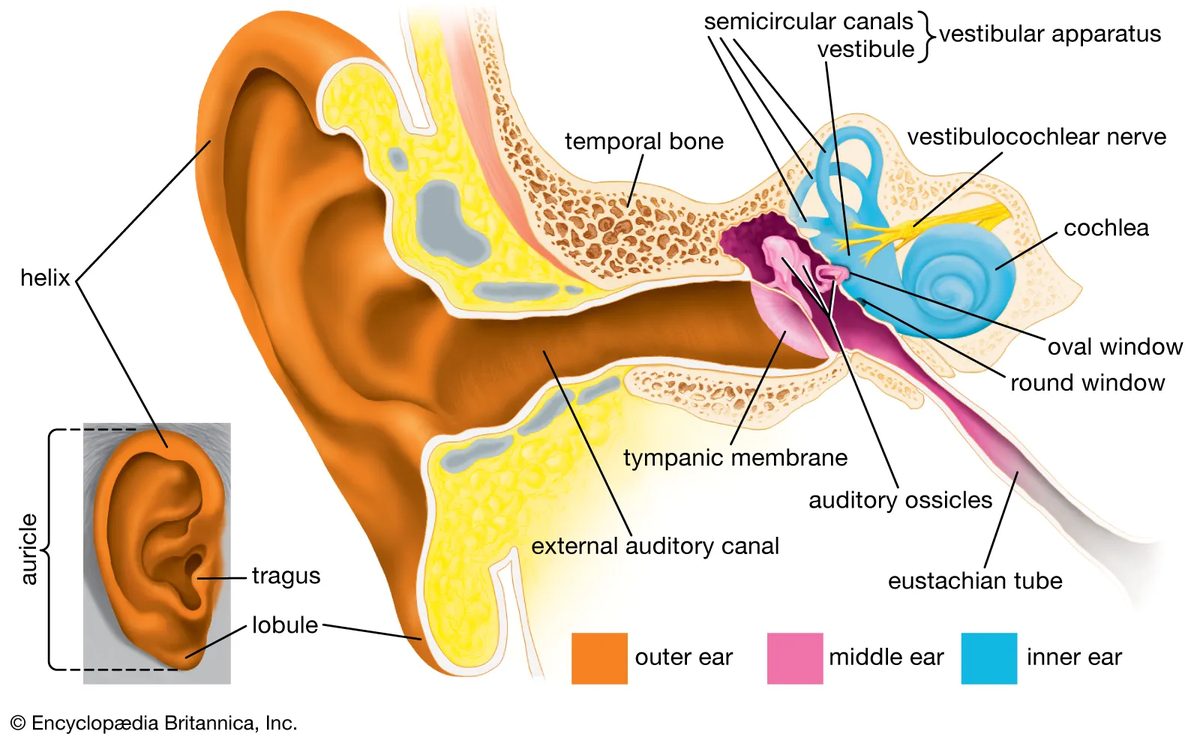
It’s more than a nuisance. If the volume and duration are high enough, the noise becomes a physical attack on the body. It can damage the eardrum. It crushes the sensitive hair cells of the inner ear. The result is noise-induced hearing loss.
This damage usually does not occur at levels below 80 dBA. However, experts recommend keeping the 8-hour exposure below 85 dBA. Exceeding 105 dBA repeatedly will almost certainly cause permanent hearing loss.
The hidden health risks of excessive noise
The damage is not limited to the ears. Long-term exposure to noise can raise blood pressure. The pulse increases. Restlessness comes, followed by anxiety and mental fatigue. It affects sleep. The same goes for entertainment and basic personal communication.
Children are particularly vulnerable. People living in noisy areas face stress. Memory loss happens. Observation time shortens.
“Noise pollution prevention is therefore very important in the workplace and in the community.”
It’s not just about convenience. This applies to public healthcare.
When sound becomes an existential threat
Wildlife pays a high price for human noise. Insects, frogs, birds, bats They all rely on sound. To find a partner, to communicate, navigation. To find food. To avoid predators.
Pollution destroys this. For some species, this poses an existential threat.
The crisis is worst in the oceans. Marine animals rely on echolocation. Whales and dolphins use sound waves for navigation and hunting. Many of the world’s oceans are now filled with chaotic noise.
Ship engines, seismic surveys, oil drilling. They create a wall of sound that masks biological signals.
Naval sonar equipment is one of the biggest sources of noise. Their noise can travel hundreds of kilometers underwater. The correlation between whale and dolphin strandings is well documented.
We elevate the natural world
How noise regulations protect your ears
Laws regulating noise are not just red tape. These are structural defenses against pollutants that can harm your health and disturb your sleep. In the United States, this protection is based on the Occupational Safety and Health Act of 1970 and the Noise Control Act of 1972. These are not suggestions. We have strict limits on the level and duration of noise in the work environment.
The Occupational Safety and Health Administration (OSHA) uses a specific formula to calculate exposure. It’s not just peak decibels. It’s about the total dose.
$$D = (C_1/T_1) + (C_2/T_2) + (C_3/T_3) +…$$
Where C is the actual time spent in noise. T is the maximum time allowed for that level. Add fractions. If the sum is greater than 1, you are in the danger zone. Values greater than 1 are not accepted. The math is simple. The consequences are not.
Understanding the noise standard curve
As regulations move from factory floors to living spaces, standards also change. We need comfort, not just security. This is where the Noise Criterion (NC) and Preferred Noise Criterion (PNC) curves come into play.
The NC curve was introduced in 1957. NC curves describe the audio spectrum in octaves. What is their goal? Nice workspace. But they have a blind spot. Subtle, harsh frequencies that make a room feel oppressive are ignored.
In 1971, the PNC curve was introduced. They corrected this deficiency. PNC adds tight limits to two specific nuisance sounds: low-frequency rumble and high-frequency hiss. PNC is an excellent standard for designing offices and homes.
Noise is unacceptable if the noise level exceeds these limits. you act. You introduced sound-absorbing materials. The goal of the design is not to allow these curves to be exceeded.
Practical Mitigation Strategies
You can’t always change the source. Sometimes you have to change circumstances.
In closed spaces, low noise can be dampened with thick curtains or acoustic tiles. But what about privacy?
In open offices and medical facilities, the sounds of adjacent conversations can be disturbing. I lose concentration. It was a breach of confidentiality. The solution is not silence. This is camouflage.
Small sources of white noise (static or moving air) can drown out obvious conversation. This is not dangerous. This is not offensive. It just blurs the edges of other sounds. This is common in clinics. This raises the lower limit of audible sound and makes it difficult to understand some sounds, but it works without damaging your hearing.
In personal protection, hearing protectors are still the gold standard.
They are more than just foam plugs. Commercially available hearing protectors can significantly reduce the noise level. At 100 Hz, a reduction of about 10 dB can be expected. Attenuation above 1000Hz can exceed 30dB. This is more than convenience. This is to protect your hearing.
Combating external noise pollution
Indoor standards mean nothing if it’s screaming outside. Residential construction can provide protection, but only if it meets the minimum requirements. Only if external noise is within acceptable limits.
These limits are time sensitive. More noise is generated during the day. Less time is needed in the evening. The night is sacred.
Physics is tricky here. Due to the night temperature inversion, the sound is refracted upwards and then downwards. A highway miles away can cause noise and disturbance in your bedroom. Air acts like a lens, bending sounds you thought were gone.
Barriers are traditional solutions. We build walls next to highways to separate traffic and housing.
But there’s a problem. The sound is refracted. It bends around obstacles. This diffraction is more severe at low frequencies. And road noise? The bass area, especially the bass area of the truck, is dominant.
Therefore, only perfectly placed obstacles are effective. It must be close to the source or observer. It’s best to have a source. This maximizes the diffraction path and allows the sound to crawl along the wall. It must also block transmission. If the wall lets sound through, it’s just scenery.
Geometry is important. Materials are important. But what about placement? This is where most projects fail.