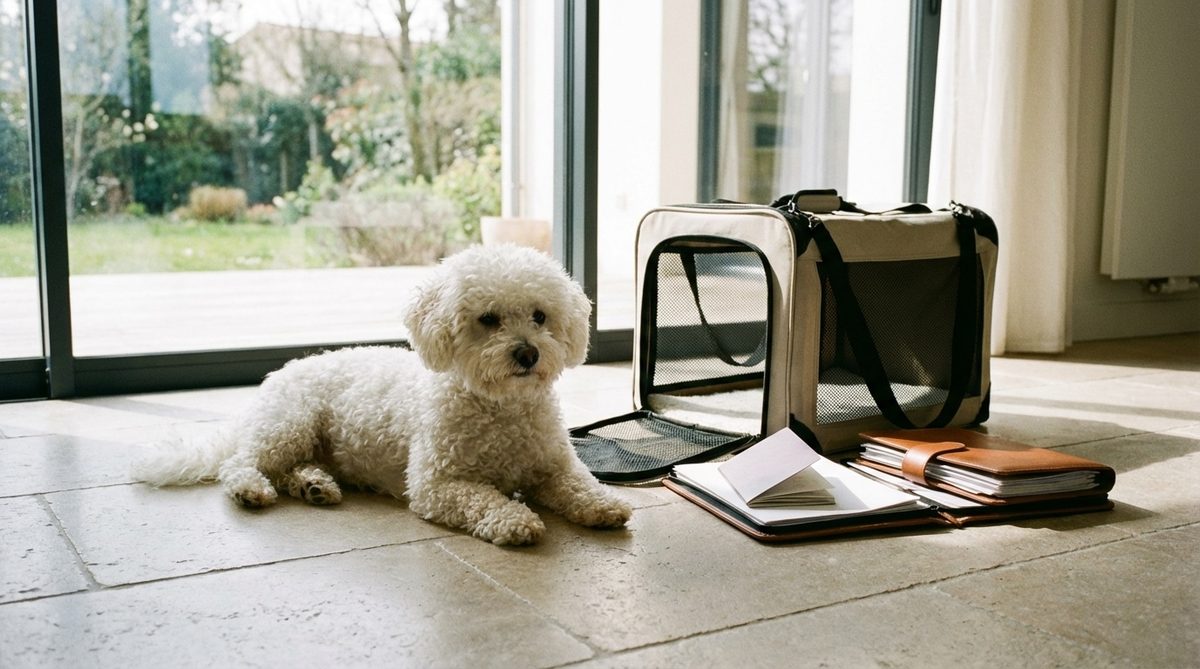
Spring is calling. The grass is green. You want your dog to explore new horizons with you.
Dream on.
Airports are not romantic places. They are bureaucratic gauntlets. If you thought you could fly with your furry friend, you were wrong. The right to bring your pet aboard is not a God-given right. It is achieved through careful administrative preparation.
Skip the steps, and you risk being left behind. Picture here: The plane takes off. Your friends stay. it hurts. To avoid this nightmare, you need a plan. A strict one.
Airline policies are not universal
Civil aviation does not tolerate improvisation. There is no single rule for traveling with pets. Every carrier writes its own book. Don’t assume anything.
Before buying a ticket, read the flight’s pet policy carefully. The rules vary greatly depending on the airline. Content allowed by one operator can be blocked by another operator. You need to understand these laws before you spend a dime.
Calculating Weight and Dimensions for In-Cabin Travel
Keeping your dog in the cabin is usually the best option. Very comfortable. It is very convenient. However, it is severely limited.
Most airlines have strict weight limits. Usually around 8kg. This weight includes the weight of the animal and the bag. Do not round up. Don’t expect mercy.
The bag itself must fit under the seat. This means exact dimensions. Centimeters matter. If the bag is too big, it does not go. If the weight is 8.1 kg, it will be rejected. Weigh your dog as soon as possible. Weigh the bag. Know the numbers.
The animals must be able to stand up and turn around in the cage. This is not a suggestion. It is a welfare requirement.
The Soutte Alternative and Quota Scarcity
If your dog is too heavy, the cargo hold is the only option. It is heated. It is pressurized. It is also expensive.
This is a trap that most travelers overlook. Modern aircraft have strict quotas for animals. This applies to both the passenger compartment and the luggage compartment. These places fill up quickly.
Call the airline directly. Ask if there are spaces available. Do not rely on the website. A flight might look empty for humans. It could be completely full for dogs. If capacity is reached, we will not be able to accept reservations. Simple.
Create a complete medical profile
Logistics are difficult. Health regulations are scientific. There is no wiggle room here. Customs and ground staff don’t care about your feelings. They care about the paperwork.
I’m having problems because one stamp is missing and the other has an expiration date. You need to see a vet. Plan ahead.
Mandatory ID and European pet passport
Air tickets to most European countries are available with a European pet passport. Only veterinarians can issue this. It connects your identity with your dog’s identity.
However, you cannot get a passport without an ID. A microchip is required. Tattoos are almost always refused when traveling abroad, except in very special old cases.
No certified microchip? No passport. Don’t have a passport? There are no flights. It is a binary outcome. Get the chip before you do anything else.
Timing of rabies vaccination
Rabies is not negotiable. The rabies vaccine is the cornerstone of your dog’s medical history. But timing is everything.
A vaccine is not valid immediately. You must wait 21 days before receiving the first vaccination. This is a legal requirement.
Try counting backwards. If you fly in three weeks, you are too late. You must be vaccinated at least 21 days before departure. If you miss this window, you face two outcomes:
1. You cannot board.
2. Upon arrival, a strict quarantine is imposed.
Both are disasters. Start measuring now.
signed document. Seating is required to be reserved. But the race didn’t end before takeoff.
On the day of departure, the ground staff will scrutinize your companion’s behavior. Strict instructions have been given so that animals that have become too panicked or aggressive may not be allowed on the plane. A stressed dog is the same as being denied a ticket.
Prevent denied boarding with Positive Crate Training
Never give your dog a carrier on the morning of your flight. This ensures maximum stress levels. You should use positive reinforcement techniques for several months beforehand. The goal is to make IATA-approved hold crate a safe harbor.
When the dog calmly enters the cage by itself, the reassures the crew. This shows the airlines that the animals can psychologically handle the flight.
On the other hand, if the animal is distressed, the intervention is started immediately. For safety and welfare reasons, the captain is block embarkation. It’s that simple.
Basic confirmation checklist before booking
Success depends on three things: airline regulations, health certificate and behavioral preparation. Please review the following list before purchasing a human tickets.
- Check the correct rules: Check weight limits, cage sizes and specific pet fare policies.
- Check your quota: Call customer service. There are a limited number of pets in the hold, and they fill up quickly.
- Medical file: Make sure you have your passport, microchip and valid rabies vaccine ready.
- Behavior Assessment: Be realistic about how calm your dog is in the crate.
The secret to a smooth spring flight is anticipating airline regulations. Provide an unimpeachable medical file. Make sure your dog is comfort in the crate.
The actual work is done in advance. Once you have done this, you can easily booking both your seats. You can finally enjoy the journey together.
If you are not prepared, the trip falls apart. The difference between chaos and calm is measured in months of training. Not minutes on the day.