Penguins aren’t just the tuxedo-wearing icons of cartoon winter movies. They are a highly specialized group of flightless marine birds, scientifically grouped under the order Sphenisciformes. There are roughly 18 to 21 distinct species, and they have one non-negotiable rule: they only live in the Southern Hemisphere.
You might imagine them huddled in the ice of Antarctica. While some do, the majority actually thrive in a much broader band. Most species settle between latitudes 45° and 60° South. This is where they breed on islands scattered across the ocean. It’s not all frozen wasteland, though. Some species have adapted to temperate zones with milder climates. Then there is the outlier. The Galapagos penguin (Spheniscus mendiculus ) lives right on the Equator.
The Geography of Penguin Habitats
The distribution of these birds tells a story of adaptation. While Antarctica gets the spotlight for its cold, most penguin species prefer the cooler, temperate waters between 45° and 60° South. These areas offer rich food sources and isolated breeding grounds on islands.
This geographic spread highlights their versatility. Not all penguins are built for extreme cold. Some have evolved to handle warmer conditions. The Galapagos penguin stands out as the only species that crosses the Equator. Its existence challenges the simple notion that penguins are strictly arctic or antarctic creatures.
Adaptation to Marine Life
These birds are masters of the water. Being flightless has freed up their energy for swimming. Their wings have evolved into stiff, paddle-like flippers. This allows them to cut through water with incredible speed and agility. They dive deep to catch fish, squid, and krill.
On land, they are less graceful. Their upright stance and short legs make walking a bit clumsy. But in the ocean, they are predators. This dual existence defines their survival strategy. They spend most of their lives at sea, coming to land only to breed and molt.
Breeding and Survival Challenges
Penguins breed on islands in the 45° to 60° South latitude band. These locations provide relative safety from terrestrial predators. However, they face significant threats from the sea and the changing climate.
The Galapagos penguin’s location near the Equator exposes it to different ecological pressures. It must cope with warmer waters and unique food availability. This contrasts sharply with species in colder regions, where ice stability is a major concern.
Why They Matter
Penguins play a key role in marine ecosystems. They help regulate fish populations and serve as prey for larger animals like seals and sharks. Their presence indicates the health of the ocean. Studying them helps scientists understand climate change impacts on marine life.
Their ability to thrive in such varied environments, from equatorial waters to Antarctic ice, shows remarkable evolutionary success. Yet, they remain vulnerable. Changes in ocean temperature and food supply can quickly affect their populations.
The Future of Penguins
As climate patterns shift, so do the habitats of these birds. Some species may need to move to new breeding grounds. Others might struggle to adapt. The Galapagos penguin, already living on the edge, faces unique challenges.
Understanding their distribution and needs is crucial for conservation efforts. Protecting the islands
The spectrum of penguin size and color
Penguins have this stocky, short-legged silhouette that people just love. It’s a look that’s endeared them to audiences across the globe. But they are not a monolith. They come in wildly different sizes.
The smallest are the blue, or fairy, penguins (Eudyptula minor ). They stand about 35 cm (14 inches) tall. They weigh roughly 1 kg (about 2 pounds). Tiny. Adorable.
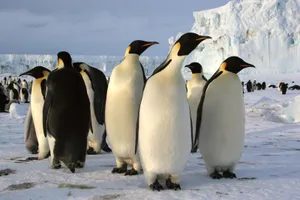
Then you have the emperor penguin (Aptenodytes forsteri ). They hit 115 cm (45 inches) in height. Their weight ranges from 25 to 40 kg (55 to 90 pounds). Massive.
Most penguins stick to a classic pattern. Black on the back. White below. Sometimes they have lines of black across the upper breast. Or spots of white on their heads. It’s a reliable uniform.
True color is rare in this group. You don’t see bright plumage often.
When color does appear, it’s usually subtle. Some species have red or yellow irises. A few have red beaks or feet. It’s easy to miss if you aren’t looking closely.
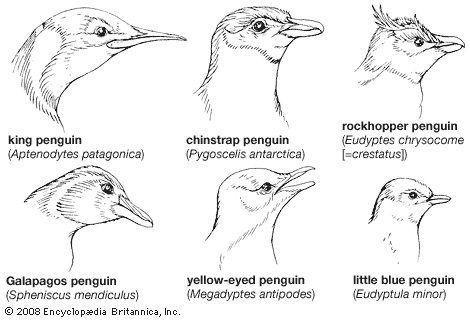
The genus Eudyptes is different. These three species sport yellow brow tufts. It looks like they’re wearing eyeliner.
The emperor and king (A. patagonica ) penguins go bold. They have orange and yellow on their heads, necks, and breasts. These are the most colorful penguins you will encounter.
Color is rare, being limited to red or yellow irises of the eye in some species; red beaks or feet in a few; yellow brow tufts in the three species of Eudyptes; and orange and yellow on the head, neck, and breast in the emperor and king penguins.
It’s a sharp contrast to the black-and-white majority. Which penguin type do you think looks more striking? The subtle yellow brows or the bold orange chest? Hard to say. The variety is the point.
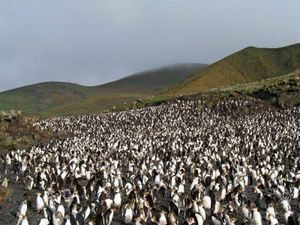
The numbers tell a story of scale that is hard to fully grasp. Emperor penguins sit at the lower end of the abundance curve, with total populations estimated only in the hundreds of thousands. But shift your gaze to the smaller species, and the picture changes entirely. Many of these birds run into the millions. They are not rare curiosities. They are a biological force.
Breeding colonies as food resources
Look at the nesting grounds. Some islands host colonies so vast they teem with hundreds of thousands of pairs. These are immense, chaotic hubs of life. Theoretically, this density represents a massive food resource. Yet, economically, penguins are negligible. We do not hunt them for profit anymore.
The history is different. In the nineteenth century, whalers and seal hunters did visit these colonies. They took meat. They took eggs. There was even a penguin oil industry that harvested large numbers of the birds for their fat. It was a brutal extraction. But by the early twentieth century, the economics shifted. The practice was no longer profitable. The exploitation stopped. Most colonies were left alone. Some were actively protected. The market decided their worth was too low to justify the effort.
The unintended benefit of whaling bans
Here is where the story gets complicated. Some species are now increasing in numbers. The reason is not direct conservation efforts alone. It is an unintended consequence of mid-twentieth-century decimation of Antarctic whales.
Whales and penguins compete for the same food. Krill. Those minute crustaceans form the base of the Southern Ocean food web. When whalers nearly wiped out whale populations, they removed a major competitor. The krill remained. Penguins ate more. The population grew.
Competition for krill between penguins and whales shaped penguin population booms when whaling reduced whale numbers.
Climate and ocean sensitivity
This growth is precarious. Penguins are highly vulnerable to changes in climate. Ocean temperature fluctuations matter deeply. Recent global warming is not just a background statistic. It is a direct threat to their breeding success and foraging efficiency.
Human impact extends beyond historical hunting. Depletion of local fish populations by humans creates another layer of risk. When we remove the fish, penguins struggle. Their sensitivity to these environmental shifts makes them indicators of ocean health. A decline in fish stocks is a decline in penguin survival.
The balance is delicate. Decades of protection helped them rebound from direct hunting. But the ocean is changing faster than policies can adapt. The krill are shifting. The water is warming. The birds are adjusting, but not always fast enough.
How Penguin Breeding Cycles Actually Work
It’s a myth that all penguins follow the same rigid calendar. Their reproductive rhythms are dictated by a mix of body size, geographic location, and latitude. For most species, the breeding season is a once-a-year event. But look closer and the diversity kicks in.
The African penguin (Spheniscus demersus ) likely shares a trait with other members of its genus and the blue penguin: they breed twice a year. That’s a massive difference from the king penguin, which operates on a much slower king penguin breeding cycle, reproducing only twice every three years.
Clutch size is another variable. The emperor and king penguins lay a single egg. Every other species typically produces two, though three is occasionally recorded.
Timing is everything in the harsh southern hemisphere. Most species wait for the austral spring or summer to begin the grind. The king penguin’s timeline is particularly erratic, spanning 14 to 18 months. A specific pair’s schedule depends entirely on whether their last attempt succeeded or failed.
Even within the gentoo penguin (Pygoscelis papua ) population, some groups have shifted their strategy to breed in winter.
Then there is the emperor penguin. Their process starts in autumn. Why? Because it takes an incredibly long time for the chick to develop. By starting early, they time the hatching to land in midsummer. The young are born when survival chances are at their absolute peak.
“The breeding of the emperor penguin begins in autumn, apparently timed so that the long developmental period will produce the young in midsummer, when their chances of survival are greatest.”
It’s a high-stakes calculation. Get the timing wrong and the chick doesn’t just struggle. It dies. The emperor penguin’s autumn start ensures the long developmental period aligns with the brief window of relative warmth.
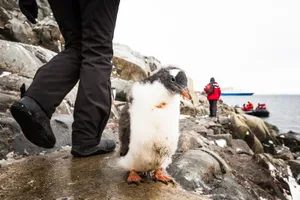
Gentoo penguins roam the southern hemisphere with a circumpolar reach. They are everywhere. And yet, they refuse to march in lockstep.
That lack of synchrony among populations is their defining quirk. Most penguin colonies operate like clockwork. The gentoo does not. Their breeding schedule is otherwise standard, though. It mirrors the rhythm of most other species out there.
Consider the Crozet Islands. They sit off the southern coast of Africa. Here, the calendar is strict. Egg laying begins in July.
Two eggs. That is the norm.
The incubation period holds tight. It lasts thirty-five or thirty-six days. Then comes the rearing phase. Chicks spend two months on land. They grow. They fatten. They wait.
Finally, the last immature birds depart. This happens in January. They head out to sea. The cycle breaks. The adults return to the ocean, leaving the next generation to face the waves alone.
The moment the birds hit the colony, the show begins. It is a cacophony of visual flair and vocal noise that lasts from arrival until departure. But underneath the chaos, there is a rigid script.
Courtship calls are the primary tool here. They are essential during pairing. They play a smaller role in the breeding phases that follow. You can hear the difference in some species. The emperor penguin and the king penguin have marked vocal differences between males and females. Other species show less distinct dimorphism.
The Power of Memory
Every bird has a destination. Upon arrival, each one ignores the new arrivals. They ignore the random noise. They return to the specific nest they left the previous year.
Generally, they rejoin the mate they had last time. It is a commitment to continuity. Unless death intervenes. If the previous partner is gone, the bird must choose a new one. This rule applies broadly.
Even the emperor penguin follows this logic. The math seems impossible. These colonies are vast. Millions of birds packed into ice. There are no landmarks. There are no nests to guide them in the early stages. Yet, they find each other.
“This applies even to the emperor penguin, which is capable of finding its mate despite the absence of a nest and the large size of the colony.”
How do they do it? The vocal cues must be incredibly specific. Each bird learns the unique signature of its partner. It is not a group chant. It is a targeted search. The complexity of the environment makes the precision of this recognition even more striking.
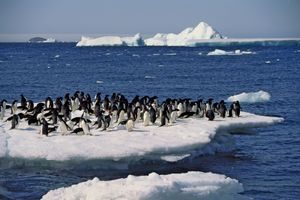
Penguin mating rituals are a study in contrasts. The visual choreography—the reassembly of the colony, the search for a partner, the pre-copulation dance—is remarkably consistent across species. It’s a universal script.
The sound, however, tells a different story.
While the moves are similar, the vocalizations are wildly diverse. You have trumpeting, croaking, cackling, cooing. It’s an acoustic chaos. Then there are the Spheniscus genus birds. We call them jackass penguins. The name comes from the donkey-like bray they emit. It’s loud. It’s jarring. It works.
Experience matters here. Older, seasoned birds don’t just follow the script; they improvise with better timing. Their behavior is more elaborate. More effective. Youngsters fumble. They mimic, but they lack the polish.
Take Adélie penguins (Pygoscelis adeliae ). They might return to the breeding colony starting in their third year. But don’t expect chicks yet. Success doesn’t hit until their fifth or sixth year. There is a learning curve. A period of trial and error where they figure out exactly how to make themselves heard in the noise.
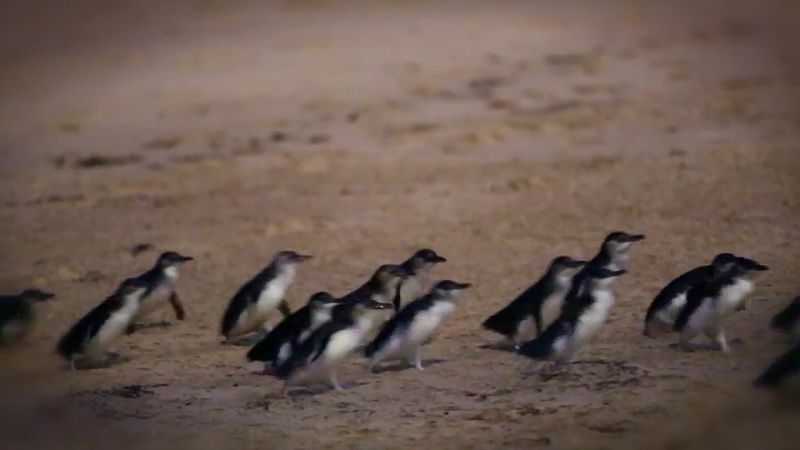
The High-Stakes Game of Penguin Incubation
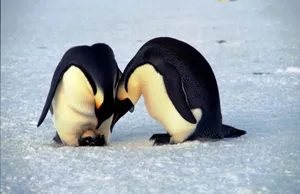
For almost every penguin species, raising the next generation is a shared responsibility. Both parents take turns keeping the eggs warm and safe. The emperor penguin is the glaring exception. Here, the male handles incubation exclusively. He starts the moment the egg appears.
The shift from mating season chaos to this quiet, stationary phase is stark. The frantic cries and bustling energy of courtship vanish. In their place is stillness. But this stillness is fragile. Inexperienced birds often mess up. They abandon eggs or crush them. The stakes are incredibly high.
Why Mortality Rates Are So Brutal
Mortality at the egg and chick stage is a massive filter for the population. It fluctuates wildly. Year to year, the numbers swing based on climate, the ratio of young birds in the breeding group, and how hard predators are pressing. Generally speaking, forty to eighty percent of all laid eggs never make it to hatching. That is not a small loss. That is a catastrophic filter.
Predators change by location. In coastal colonies, the hierarchy of threats is clear. Skuas sit at the top, followed by sheathbills, then giant petrels. These are not just nuisances; they are major drivers of population dynamics.
“In general, mortality (eggs and chicks) is from 40 to 80 percent of the eggs laid.”
On the Australian, African, and South American continents, the equation shifts. Many penguins there nest in burrows. Some are nocturnal. These adaptations drastically limit predation. When attacks do happen, they are mostly by gulls or humans. Burrows and night habits are effective shields.
The Male’s Solitary Ordeal
After laying the egg, the female usually leaves. She heads to the sea to feed. She stays away for ten to twenty days before returning to relieve her mate. Once she is back, they settle into a rhythm. They alternate shifts. Each shift lasts a week or two. It is a manageable division of labor for most species.
The emperor penguin story is different. It is a story of endurance. The female must walk fifty to one hundred miles to get to the ocean. She does not return until incubation is over. She is gone for the entire duration.
This leaves the male with the full burden. The incubation period lasts sixty-four days. This time pushes right through the height of the Antarctic winter. It is the coldest, darkest, windiest part of the year.
The male keeps the egg on his feet. He covers it with a warm fold of skin. He does not eat. He lives entirely on stored fat reserves. His body consumes itself to keep the embryo alive.
Huddling Against the Cold
When the winter storms hit, the colony changes shape. They do not scatter. They gather. Thousands of birds pack together. They form tight crowds called huddles. This is not social. It is survival.
The huddle provides mutual protection. It breaks the wind. It traps heat. Individuals rotate positions. Those on the outside move to the warm center. Those in the center eventually get pushed back out. It is a brutal, efficient system for staying alive.
The male stands there. He holds the egg. He waits. The storm screams outside. Inside the huddle
The First Few Days: Survival and Soup
Breaking out of that shell isn’t a quick affair. It drags on for 24 to 48 hours. During this window, the brooding parent is on edge. Irritability spikes. They’re protecting a fragile life that is barely clinging to the outside world.
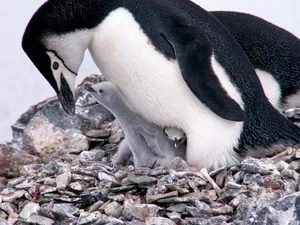
The moment the chick emerges, hunger hits hard. There is no waiting period for instinct to kick in. It feeds immediately. The mechanism is specific. The chick inserts its bill directly into the parent’s open mouth. What comes out isn’t solid prey. It’s a regurgitated soup. Usually, this liquid meal consists of crushed crustaceans or small fish. It’s an efficient delivery system for a bird that can’t yet dive or swim.
The Crèche System and Parental Identification
Early survival relies on body heat and proximity. The young bird stays tucked under the parent’s body. This isn’t a solo act. Parents take shifts. One forages at sea while the other keeps the chick warm and safe. As the bird grows, it gains the ability to regulate its own temperature. It can move around independently. But it stays close to a parent. Eventually, the dynamic shifts.
The chick joins a crèche. These are nursery groups containing 100 or more contemporaries. Sometimes, a few adults guard the perimeter. But for the most part, both parents head out to sea to forage. The crèche is a place of waiting.
When the parents return with food, the chaos begins. The parent calls out to its specific chick. It pulls the young one out of the dense crowd. This identification process is not visual. It’s auditory. The parent distinguishes its offspring by voice. Appearance can be misleading. Many other chicks in the group respond to the call, drawn by the promise of food. But the parent ignores the false signals. It waits for the unique vocal signature of its own young.
This system raises questions about how such precise recognition evolves in such noisy, chaotic environments. The answer lies in the subtle frequencies of the call and the specific history of interaction between parent and chick. It’s a testament to the complexity of avian communication. And it leaves one wondering how many chicks go unnoticed in those massive groups.
The High Cost of Breeding Failure
Penguin colonies are not just about happy families. They are crowded, chaotic, and often cruel.
During breeding season, the number of “unemployed” adults swells. These are birds that have lost their eggs or chicks. In emperor penguin colonies, this group becomes dangerous. They frequently interfere with parents who still have young. The result is increased mortality for the chicks left behind. It is a harsh reality of survival.
Then comes the transformation.
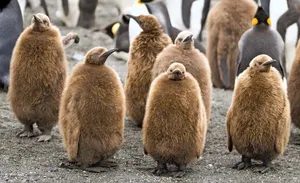
The fluffy down covering the chick since hatching falls away. It is replaced by a coat of short, stiff feathers. These look similar to adult plumage but differ in color. Once this molt finishes, the juvenile leaves the colony. It heads to sea to find its own food.
Growth Timelines Vary Wildly
How long does it take for a penguin to become independent? The answer depends entirely on the species.
For the smallest members of the genus Eudyptula, the period from hatching to complete independence lasts just two months.
Emperor penguins take longer. They spend five and a half months growing up.
King penguins have the longest runway. It takes twelve to fourteen months for them to reach maturity.
The Vulnerable Molting Period
Adult penguins molt all their feathers once a year. This happens after the breeding period ends.
Molting is not a quiet process.
While molting, a penguin cannot enter the water. It is landlocked and vulnerable. Instead, it withdraws to a communal molting site. These sites are usually sheltered areas away from the main colony.
The duration of this process varies by size. Small species finish in about two weeks. Larger species take more than a month.
During the molt, a penguin cannot swim. It must hunker down and survive on land until its new feathers grow in.
This leaves a window of weakness. Predators wait. Food is scarce. The colony shifts from raising young to ensuring the survival of the adults themselves. It is a necessary pause in the annual cycle. But it is also a time of high risk.
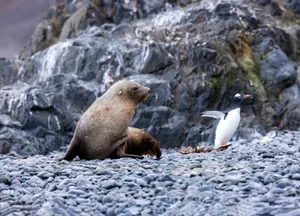
The water isn’t safe.
Penguins spend half their lives in the open ocean, a place that looks empty but is actually packed with things that want to eat them. The biggest threats? Leopard seals and killer whales. These aren’t just opportunistic snackers. They are surgical, efficient, and everywhere.
Near Australia and New Zealand, and across other subantarctic zones, other seals join the hunt. It’s a crowded food web at the bottom of the world.
How penguins fly underwater
You’ve seen the videos. A penguin doesn’t just swim. It flies.
Its wings have flattened into stiff, paddle-like flippers. The bones are solid, not hollow like land birds. This adds weight, helping them sink fast. Gravity does half the work. The muscles do the rest.
They don’t paddle. They flap. The angle of the wing changes with every stroke. It’s a complex, continuous motion.
The mechanics of underwater flight
Penguins are hydrodynamic nightmares for predators.
- Speed: Emperor penguins can hit 22 km/h (14 mph). Chinstraps are faster, up to 36 km/h (22 mph).
- Depth: Emperor penguins dive past 500 meters. Some records go to over 560 meters.
- Duration: They can hold their breath for over 20 minutes.
They don’t use their tail for steering. The tail is stiff, locked in place. It acts as a rudder only at the end of a dive. Mid-water, it’s useless for maneuvering.
Why orientation matters in the dark
Underwater, light fades fast. It’s black down there. How do they know which way is up?
They don’t rely on sight alone.
- Vestibular system: The inner ear detects gravity and acceleration. It tells the brain which way is down.
- Proprioception: Sensory receptors in the muscles and joints track limb position. They know where their wings are without looking.
- Pressure changes: Sensors along the body detect depth and water pressure. This helps maintain stability.
They don’t need to look around to stay upright. Their bodies just know.
How they evade predators
Leopard seals wait near the ice edge. They watch for splashes. Penguins don’t just jump in. They dive headfirst.
Once underwater, the game changes.
- Speed bursts: They accelerate quickly, closing the gap between them and safety.
- Deep dives: They drop below the seal’s preferred hunting depth. Leopard seals are agile, but they aren’t built for sustained deep diving.
- Evasive turns: They make sharp, sudden turns. Their stiff wings allow for rapid direction changes.
Killer whales are different. They hunt in packs. They use bubbles and noise to confuse prey. Penguins can’t outsmart a coordinated pod. They can only outrun them. And they can.
The cost of speed
Flying underwater is expensive.
Metabolism spikes. Heart rate drops to conserve oxygen, but the muscles demand more. It’s a trade-off.
- Oxygen storage: Penguin blood has high hemoglobin. Their muscles store oxygen
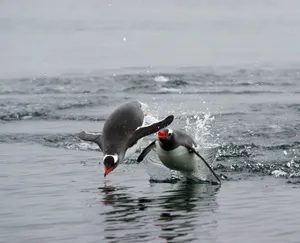
The Acrobatics of Underwater Flight
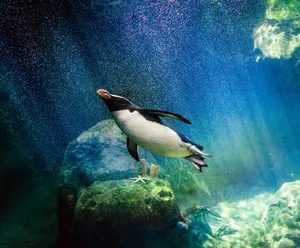
Penguins aren’t just swimming. They are flying. Their wings have evolved into stiff, hydrodynamic flippers designed for one purpose: rapid locomotion through dense water.
When these birds push off, they don’t just glide. They generate enough lift and speed to break the surface entirely.
Watch closely. A penguin accelerating through the depths will suddenly launch itself upward. It clears the water by a metre or more. That leap isn’t random. It’s a calculated maneuver.
“It is during this time that they breathe.”
The air is the only place they can refill their lungs.
This creates a fascinating rhythm. Swim hard. Leap high. Breathe. Dive again.
The physics are simple but brutal. Water is 800 times denser than air. Moving through it requires immense power. Leaving it requires precise timing. If the penguin stays underwater too long, it runs out of oxygen. If it stays in the air too long, it crashes back down with wasted energy.
Their bodies are built for this specific cycle. Bone density reduces buoyancy. Muscle mass provides the thrust.
It looks like chaos. It’s actually highly efficient engineering.
Why do they leap at all? Why not just stay submerged? Because they need air. And because the leap resets their position, allowing them to spot prey or avoid predators from above.
The next time you see a penguin bobbing in the surf, remember: it’s not resting. It’s calculating.
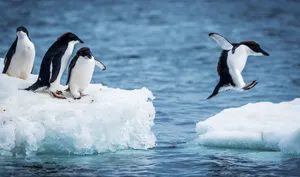
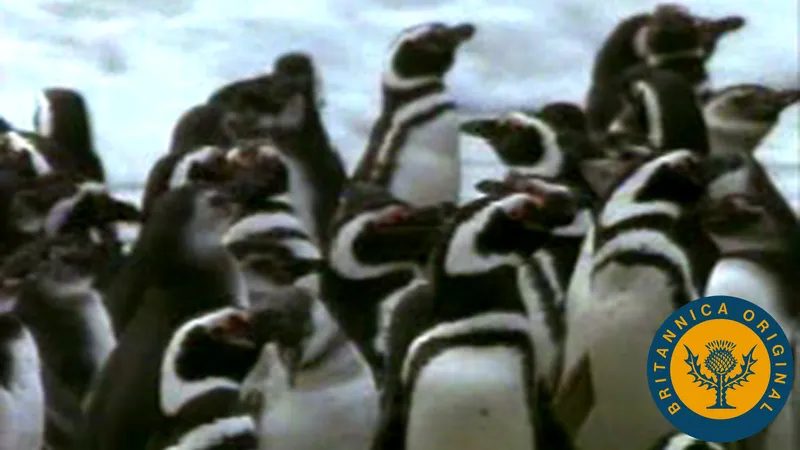
On solid ground, penguins look ridiculous. They waddle, tipping their weight from one foot to the other in a clumsy dance. It is hard to take them seriously when they look like falling drunken toasters. But do not be fooled by the awkward shuffle. Those short legs can pump fast. Some species sprint with surprising speed when they need to.
Agility depends on the terrain. Rockhopper penguins, both the northern Eudyptes moseleyi and southern E. chrysocome varieties, treat jagged rocks like a playground. Adélie penguins do too. They use their stiff flippers as counterweights. They balance sharply, hopping between stones with precision.
Ice and snow are different. Here, they skip the walking entirely. Many penguins drop to their bellies. They slide. This “tobogganing” is efficient. They push forward with their feet and flippers. It saves energy. It is faster than waddling.
Defense and Attack Tactics
The flippers are not just for swimming or balance. They are weapons. Along with the hard, hooked beak, they form the primary defense arsenal. If a predator gets too close, or if a rival intrudes, the flipper becomes a club. The beak delivers the sting. These tools are essential for survival in harsh environments where food is scarce and competition is high.
How Penguins Navigate Home
Scientists have puzzled over penguin navigation for decades. The question is basic but deep. How do they find their way back to their colonies after drifting far out to sea? Ocean currents can push them hundreds of miles off course. Once on land, the problem remains. There are no clear-cut landmarks in the white void of Antarctica. How do they know which direction is home?
Research has provided some answers. Studies involving penguins transported to the interior of Antarctica show they use the sun. They treat it as a directional aid. It is a compass made of light. When they approach the coast, they switch tactics. They recognize specific features of the shoreline. They also map the ocean bottom. These visual cues lock them in.
At sea, the sun likely does the heavy lifting. It is probable that the same means of orientation guides them across open water. The brain stores the sun’s position relative to their course. When they see the coast, the map updates. The journey ends.
Food habits
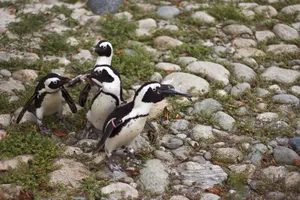
Form and function
What a penguin eats isn’t random. It depends on where you are. And when. And who you are.
Take the smaller southern species. They chase krill. These tiny crustaceans swarm in dense clouds in Antarctic waters. The water there is cold and oxygen-rich. Perfect for krill. Perfect for penguins that feed on them.
But it’s not always krill.
Cephalopods show up too. Squid. Cuttlefish. Small fish. In some species, these make up a huge chunk of the meal. Look at the African penguin. Fish is the main event. It’s the basic element.
The scale of consumption is hard to wrap your head around. A large colony doesn’t just snack. It feasts. The total weight of food eaten can be prodigious. Several tons per day. Just to keep the colony going.
The sheer volume of biomass consumed by these colonies is staggering, often exceeding several tons daily.
This isn’t just about hunger. It’s about energy. Penguins dive. They swim fast. They regulate heat. It takes a lot of calories.
Where does that energy come from? The ocean provides the fuel. But the type of fuel changes.
In the south, krill is king. In the north or near Africa, fish takes the lead. Cephalopods fill the gaps.
It’s a complex food web. And penguins are right in the middle of it. Hungry. Always hungry.
Why species matter
Not all penguins eat the same thing. Evolution shaped their diets. Geology shaped their habitats. Time of year dictates what’s available.
A chinstrap penguin in Antarctica might eat only krill. An Adélie might add fish. A Magellanic penguin further north switches to anchovies and squid.
Location dictates the menu. So does the season. Krill swarms move. Fish schools migrate. Penguins follow.
The ecological impact
Consider the weight. Several tons a day. From one colony.
That’s a massive transfer of energy. From small creatures to apex predators. It moves through the food chain. Up to seals. Up to sharks. Up to orcas.
Penguins are links in that chain. Critical ones. If krill numbers drop, penguins suffer. If fish stocks collapse, the whole system shifts.
They’re not just eating. They’re balancing the ecosystem. One way or another.
Anatomy of the Deep Diver
Penguins didn’t just give up flight. They traded it for a hyper-specialized aquatic existence. The result is a creature that looks like a bird only in the loosest sense of the word.
Take the feet. They are located much farther back on the body than in other birds. This structural shift forces the bird into an upright posture. You can’t help but notice the walk. It’s plantigrade. The entire sole of the foot touches the ground, not just the toes. This is a stark departure from how most birds move.
The Flipper Engine
The most striking adaptation is the forelimb. It has transformed into a rigid paddle. This isn’t a subtle change. The body morphology follows suit, designed entirely for movement in a liquid medium.
Look at the skeleton. The thoracic cage is well developed. The sternum bears a pronounced keel. This bone structure provides a massive anchor point for the pectoral muscles. Those muscles power the flippers.
The flipper itself shares a skeletal base with the wings of flying birds. But the elements are shortened and flattened. The result is a relatively rigid limb. It’s covered in very short feathers. This creates an ideal organ for rapid propulsion.
Thermal Insulation
The plumage serves a dual purpose. The feathers are short. This minimizes friction and turbulence as they slice through water. But it also traps a layer of air.
The density of this plumage, combined with the trapped air, provides almost complete insulation. The penguin stays warm in freezing depths.
“The flipper has the same skeletal base as the wing of flying birds but with its elements shortened and flattened, producing a relatively rigid limb covered with very short feathers—an ideal organ for rapid propulsion.”
It’s a trade-off. They lost the sky. They gained the deep.
Thermal Regulation in Extreme Cold
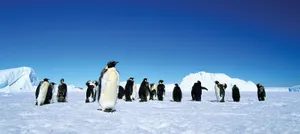
The water surrounding Antarctica never warms above freezing. For birds living there, insulation isn’t just a comfort. It is a matter of survival. The cooling power of seawater at −1.9 °C (28.6 °F) hits hard. It behaves like air at −20 °C (−4 °F) with winds howling at 110 km/h. Penguins survive this assault through a combination of trapped air and anatomical engineering.
A layer of air sits beneath the plumage, shielding the skin. Only the feet break the seal, touching the freezing medium directly. On land, emperor penguins stand on ice constantly. Their skin temperature hovers near 0 °C. Snow does not melt when it touches their feet. This defies intuition. It works because of a specialized heat-exchange system in their legs.
closely adjacent arteries and veins form a system of heat exchange between opposing flows of blood
Blood flowing out to the feet gives up its heat. That warmth is captured by the cooled blood returning from the extremities. The result is maximum economic heat conservation. The foot stays functional without draining the core body temperature.
Salt Glands and Chemical Management
Seabirds face a different problem on the ocean surface. Ingesting seawater floods the body with chloride. Penguins solve this with salt glands. These organs sit above the eyes. They filter excess salt from the bloodstream. The result is excreted as a concentrated solution. It is saltier than seawater itself.
This system is not a late-life adaptation. Young chicks have functional glands from day one. They begin consuming marine food immediately. The biological machinery is ready before they ever take their first swim.
Health Vulnerabilities in Isolation
Geographic isolation does not guarantee immunity. Recent research indicates that species like the emperor penguin remain vulnerable to disease. Distance from human activity offers some protection, but not total safety.
Consider the Adélie penguin. It carries trace amounts of pollutants in its body. The levels are lower than those found in birds living near human centers. But the presence of contaminants proves that isolation is not a perfect shield. The ecosystem is interconnected. Chemicals travel far.
Evolution and classification
Fossil record
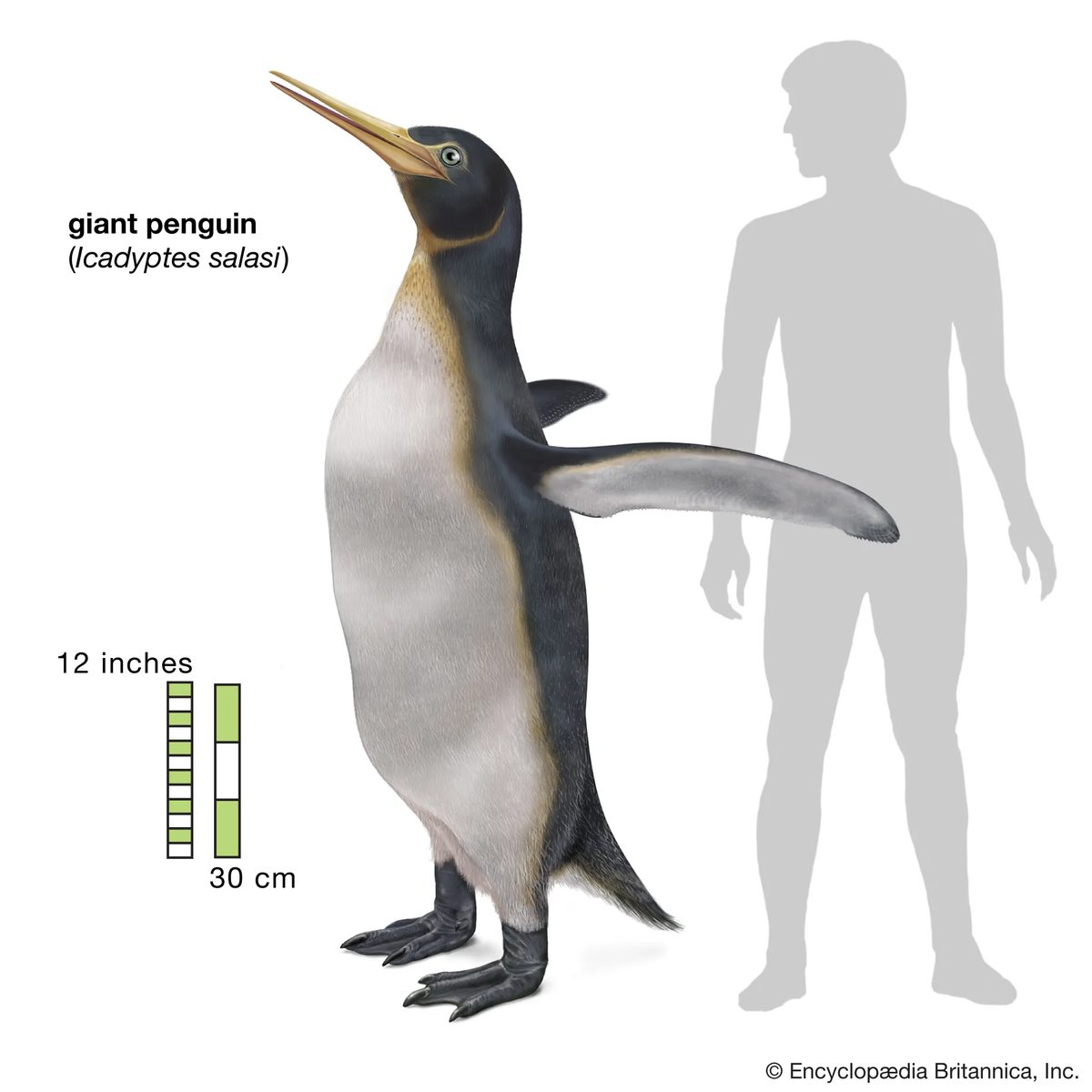
Penguins didn’t just appear. They have roots. Deep, ancient roots that tie them to another group of seabirds: the Procellariiformes. That’s the order containing albatrosses, shearwaters, and petrels. Paleontology shows these two groups share a common origin. The evidence isn’t thin. Well-defined fossils from both lineages date back roughly 50 million years.
It’s a shared history written in stone. But the paths diverged. The sphenisciform line became flightless. It branched out into distinctive side-branches. All of them recognizable as penguins. Some were massive.
Fossil remains have only been found within the modern distribution zone of the Sphenisciformes. That makes sense. But here’s the twist: some of those ancient ancestors likely lived in warmer regions than most of today’s penguins. The cold isn’t their original state. It’s an adaptation.
Big Bodies First
Phylogenetic analysis of living and fossil species tells a clear story. The group evolved large body sizes early in its history. We’re talking about giants.
Take Icadyptes. It stood about 1.5 meters tall. That’s roughly 5 feet. Or Anthropornis. It reached about 1.8 meters (6 feet). These aren’t just slightly larger versions of today’s birds. These are towering figures. And they date to the Eocene Epoch. That’s between 56 million and 33.9 million years ago.
Living penguins? They make up a separate lineage. Smaller. Highly aquatic. This branch began about 8 million years ago. The comparatively small size of living penguins is a geologically recent phenomenon. It postdates the original radiation of giant penguins. The giants came first. The small ones are the new kids on the block.
The Taxonomy of Flightless Birds
Classification helps us make sense of this diversity. It’s not just about size. It’s about lineage.
Order Sphenisciformes (penguins)
There are 18–21 species in one family: Spheniscidae. They split into 6 genera. They are found in the oceans of the Southern Hemisphere.
Wings are flipperlike for propulsion underwater. Feet are webbed. Short. Stout. Stance is upright. Feathers are short and dense. They molt in patches. Length ranges from 35 to 115 cm (14–45 inches). Fossil forms went up to 180 cm (70 inches).
Genus Eudyptes (crested penguins)
Seven species here. Erect-crested. Fiordland. Macaroni. Northern rockhopper. Southern rockhopper. Royal. Snares. They share distinctive head feathers.
Genus Spheniscus (black-footed, or jackass penguins)
Four species. African. Galapagos. Humboldt. Magellanic. The Galapagos species is a notable outlier in terms of latitude.
Genus Pygoscelis
Three species. Adélie. Chinstrap. Gentoos. Some classifications report that gentoo penguins may be divided into four species: northern gentoo, southern gentoo, eastern gentoo, and South Georgia gentoo. The lines between them are thin.
Genus Aptenodytes
Two species. Emperor. King. The largest of the living penguins.
Genus Eudyptula (blue penguin)
One species. Also called little, or fairy, penguin. The smallest of the living penguins.
Genus Megadyptes (yellow-eyed penguin)
One