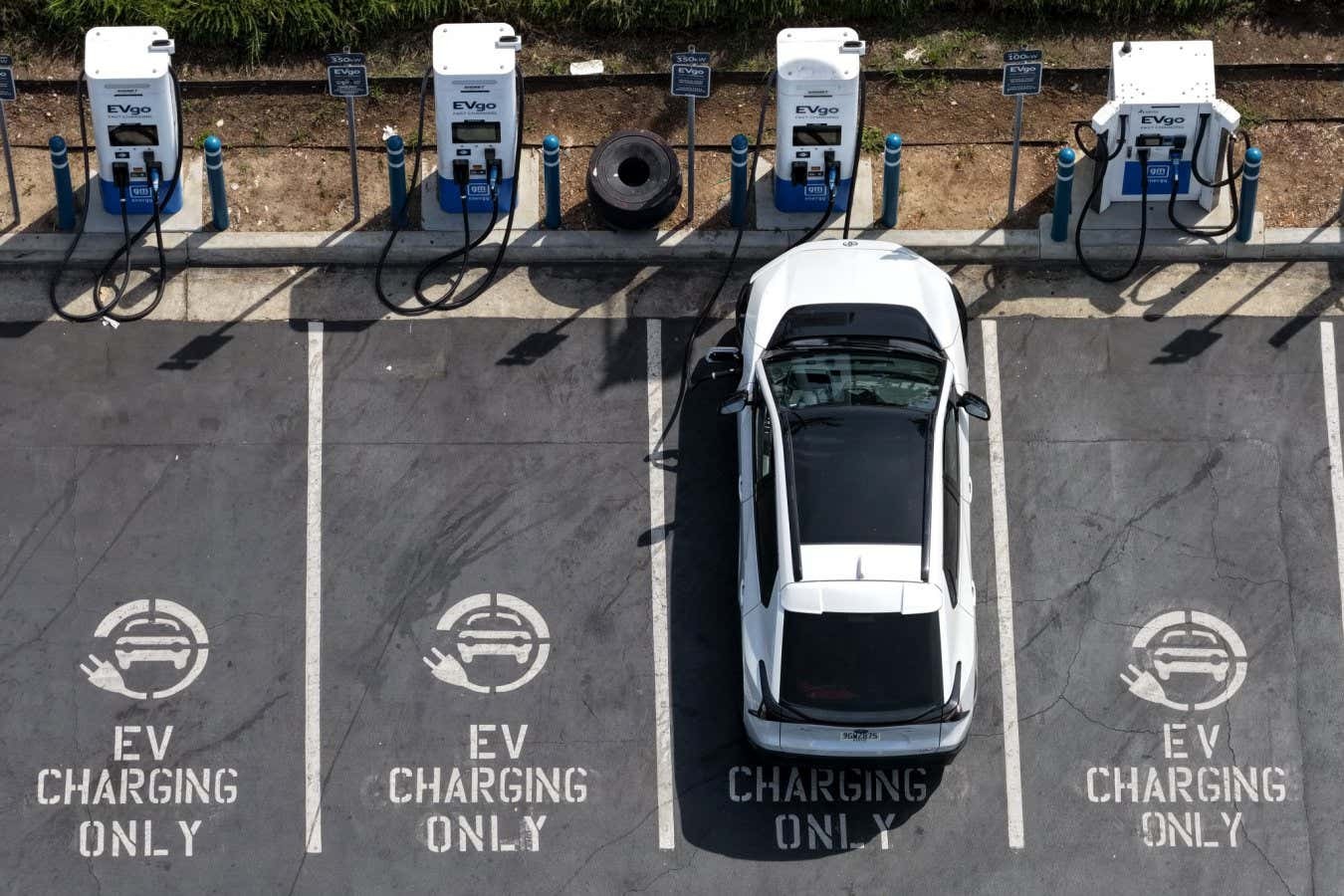
For much of the last decade, the prevailing wisdom regarding electric vehicles (EVs) has been one of caution. The primary concern? Battery degradation. There is a widespread belief that because batteries lose capacity over time, buying a used EV is a financial gamble, leading to much steeper depreciation rates compared to traditional petrol or diesel vehicles.
However, recent data and technological shifts suggest that this perception may be fundamentally flawed.
The Durability Paradox
In the early days of mass production, industrial philosophy—famously attributed to Henry Ford—dictated that components should not outlast the machines they power. If a part was “too durable,” it was seen as an economic waste.
Modern EV technology is moving in the opposite direction. Recent reports indicate that EV batteries, when properly maintained, are likely to outlast the vehicles themselves. This durability changes the math of the second-hand market. Instead of viewing a used EV as a ticking time bomb of replacement costs, consumers may soon see them as highly resilient assets that retain value far longer than previously anticipated.
Breaking the Price Barrier
The economics of the EV market are undergoing a rapid transformation driven by two main factors:
- Manufacturing Efficiency: Battery production costs have plummeted by roughly 99% over the last 30 years. While batteries still represent about one-third of a new EV’s total cost, their declining price point is narrowing the gap with internal combustion engines.
- Market Parity: As of this month, the average new EV available in the UK is now cheaper than the average new petrol car.
This shift suggests that the “green premium”—the extra cost consumers previously had to pay to go electric—is rapidly evaporating.
From Transportation to Energy Assets
Perhaps the most significant shift in the EV value proposition is the transition from seeing a car as a mere consumer of energy to seeing it as a provider of energy.
Because most EVs remain parked and plugged in for approximately 23 hours a day, they represent a massive, untapped distributed battery network. New infrastructure plans aim to tap into this:
– Grid Stabilization: Grid operators can use parked EV batteries to store excess electricity during periods of high production.
– Revenue Generation: Under new models, such as those currently being trialed in the US, EV owners could be compensated for allowing the grid to use their stored power.
– Potential Earnings: Estimates suggest the average EV driver could potentially earn several thousand pounds per year through these energy-sharing schemes.
The Drivers of the Green Transition
While environmental concerns remain a primary motivator for many, the acceleration of the electric transition is increasingly being driven by hard economic logic.
Global geopolitical tensions—such as fuel crises—continually drive up the cost of petrol and diesel, making the operational savings of EVs more pronounced. When you combine lower purchase prices, long-lasting battery life, and the potential to earn money from your vehicle, the transition to electric becomes less about “saving the planet” and more about “smart financial management.”
While the EV industry has recently faced a slowdown in sales growth, the convergence of falling costs and new revenue models suggests a much smoother road ahead for mass adoption.
Conclusion: The perceived risks of used EVs are being undermined by improving battery longevity and new ways for owners to monetize their vehicles through grid integration. As EVs become cheaper to buy and more profitable to own, economic necessity—rather than just environmentalism—will likely drive the next wave of adoption.