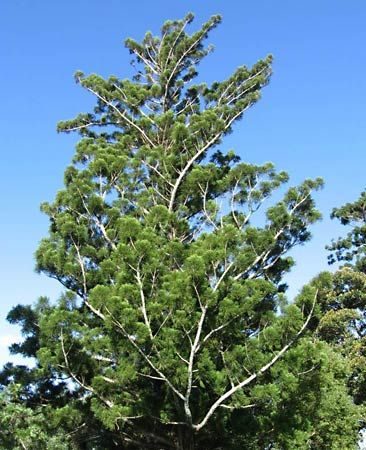
It sounds like a conifer. It looks like one. But Moreton Bay pine (Araucaria cunninghamii ) is not actually a pine. This common misnomer persists, likely due to its towering stature and resinous scent, but botanically, it belongs to the family Araucariaceae. Understanding what this tree is —and where it comes from—matters more than just getting the name right. It affects how we value its wood, its ecological role, and why it survives in such specific corners of the globe.
Where Does the Moreton Bay Pine Grow?
You won’t find this giant everywhere. Its natural range is strictly limited. In Australia, it thrives in the coastal rainforests stretching from northern New South Wales up through northern Queensland. Across the sea, it also grows in the Arfak Mountains of western New Guinea.
These locations share a specific climate: humid, tropical to subtropical, and rich in biodiversity. The tree’s presence in these two distinct regions highlights its ancient lineage. It didn’t spread randomly. It evolved in isolation, adapting to the specific soil and weather patterns of these rainforest pockets.
How Big Is a Moreton Bay Pine?
Don’t let the name fool you into thinking it’s a shrub. This is a massive evergreen timber conifer. It can reach heights of about 60 metres (200 feet). That’s roughly the height of a 20-story building.
The structure is distinct. You’ll see rough, splitting bark running up the trunk. The branches extend horizontally, creating a layered canopy. Near the tips of these branches, you’ll find dense tufts of branchlets. The leaves themselves are sharp—dagger-shaped or triangular. They’re not soft needles. They’re stiff, persistent, and built to last.
Is the Wood Useful?
Yes. Despite the botanical confusion, the Moreton Bay pine wood is highly valued. It’s cultivated specifically for its timber, which is strong, straight-grained, and relatively easy to work with.
Here’s where the confusion about “pine” might cause practical issues: because it’s not a true pine (genus Pinus ), its wood behaves differently in processing. But in practice, it’s used extensively as a veneer, and for making plywood and particleboard. If you’ve walked on engineered flooring or sat at a budget-friendly desk, there’s a chance you’ve touched wood from this tree. It’s not a luxury hardwood. It’s a reliable, high-volume timber resource.
Does It Have Edible Seeds?
This is one of the most overlooked facts about Araucaria cunninghamii. The tree is dioecious, meaning male and female cones are usually on separate individuals.
The female cones take a long time to develop. It takes about 18 months for them to mature. Once they’re ready, they don’t just drop seeds. They disintegrate. This is a deliberate strategy. The breakdown releases large, edible seeds. These seeds are not just wildlife food. They’ve been eaten by humans in traditional contexts for generations. They’re nutritious. They’re accessible. But they’re not something you’ll