You might not know his name. You probably use his math every day, though.
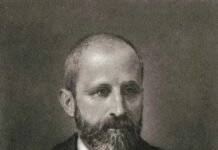
J. Willard Gibbs was born in New Haven, Connecticut, on February 11, 1839. He died there exactly 64 years later, on April 28, 1903.
He was a theoretical physicist and chemist. A quiet one. A rigorous one.
Gibbs made history at Yale. He was the very first person to earn an engineering doctorate from the university. He taught there from 1871 until he died. He started in engineering. Then he went deeper. Into theory.
He looked at James Watt’s steam engine governor. He analyzed its equilibrium. It wasn’t just about gears. It was about energy.
His major works focused on fluid thermodynamics. And the equilibrium of heterogeneous substances. He developed statistical mechanics. He mapped the relation between chemical, electrical, and thermal energy and capacity for work. With mathematical rigor.
Most people ignored him during his lifetime.
It was a tragedy of timing. The world wasn’t ready for his abstraction.
But he was right.
His application of thermodynamic theory to chemical reactions changed everything. It converted physical chemistry from an empirical practice into a deductive science. Before Gibbs, chemistry was largely observation. Trial and error. After him, it was prediction. Calculation.
He is regarded as one of the greatest U.S. scientists of the 19th century.
Why does this matter now?
Because the modern world runs on energy transfer. Batteries. Engines. Chemical plants. All of it relies on the balance of forces Gibbs described. He didn’t just observe nature. He gave us the language to predict it.
Little appreciated then. Indispensable now.
The equations he wrote down are still running the systems that keep lights on and cars moving.