3 metres tall. Over 200 kilos. Gone.
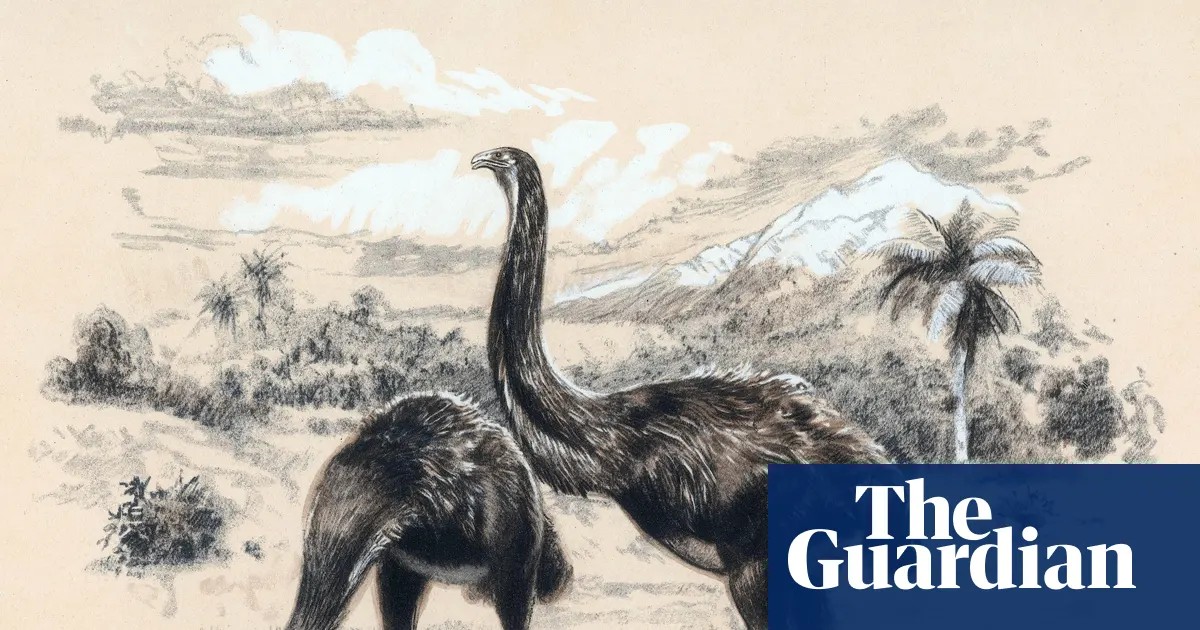
The moa was a New Zealand giant, a bird so big its eggs dwarfed anything hatched today. Now Colossal Biosciences wants it back.
They didn’t resurrect the bird itself, not yet. Instead they printed a fake shell.
### The Shell Game
It sounds small, almost silly, until you remember how hard it is to hatch anything outside nature. Colossal already cracked this for chickens, but moas? Different beast entirely. Or bird, technically.
“We’ve created a novel shell-less culture,” said Prof Andrew Pask of Colossal, claiming their new system scales and stays biologically accurate. They hope to ramp this silicone membrane up until it can handle the sheer volume of a moa egg.
Current tech struggles here. Existing ex-ovo methods often starve the chick of oxygen, keeping survival rates low. Colossal insists their membrane breathes as well as real calcite does. Let it through just enough. Too little kills. Too much warps development. They say they hit the sweet spot.
Dr. Louise Johnson thinks otherwise, mostly because there’s nothing to verify yet. An evolutionary geneticist from the University of Reading isn’t impressed by press releases. She’s right, of course. You can’t critique a headline, only a dataset.
“It sounds impressive,” Johnson admitted. Then she pivoted, hard. “I might as well give expert commentary on YouTube ads” until a peer-reviewed paper lands.
Why do we care?
### Biology Doesn’t Scale Easily
Think about the size difference. A chicken egg is tiny. An emu egg is huge. A moa egg was roughly eight times bigger than an emu’s and nearly 80 times bigger than a chicken’s.
No surrogate mother exists on earth big enough to hold one. So the shell is the only option. If that fails, the whole de-extinction fantasy deflates.
And even if the shell works, the biology is a nightmare. The moa vanished six centuries ago. DNA is not durable. It rots, breaks, frays. You aren’t pulling a pristine genome from the dirt; you are finding scattered confetti.
Colossal knows this. Look at the dire wolf project. They didn’t recreate a wolf. They tweaked twenty genes in a grey wolf to make it look angry. It was a costume change, not a resurrection. Same plan likely here. A genetic proxy.
### The Ethical Blur
This brings up the messy questions, the ones investors don’t print on t-shirts. Why?
Carles Lalueza-Fox from the Barcelona Natural Sciences Museum worries about the “superficial” resemblance. Just because it looks like a moa doesn’t mean it fits the ecological niche of one.
What happens when the experiment ends? Do we set these clones loose on New Zealand’s South Island and hope nature sorts it out? That feels like gambling with ecosystems we don’t fully understand.
There is a surprising mix here. Genuine science, sure. But wrapped in marketing. Very sharp marketing. The line between scientific breakthrough and business promotion has dissolved completely. You have to interpret their success stories through the lens of venture capital, not just biology.
Is it ethical to rebuild a ghost for a show? Maybe.
Maybe not. The egg shell sits empty. Waiting for an answer.