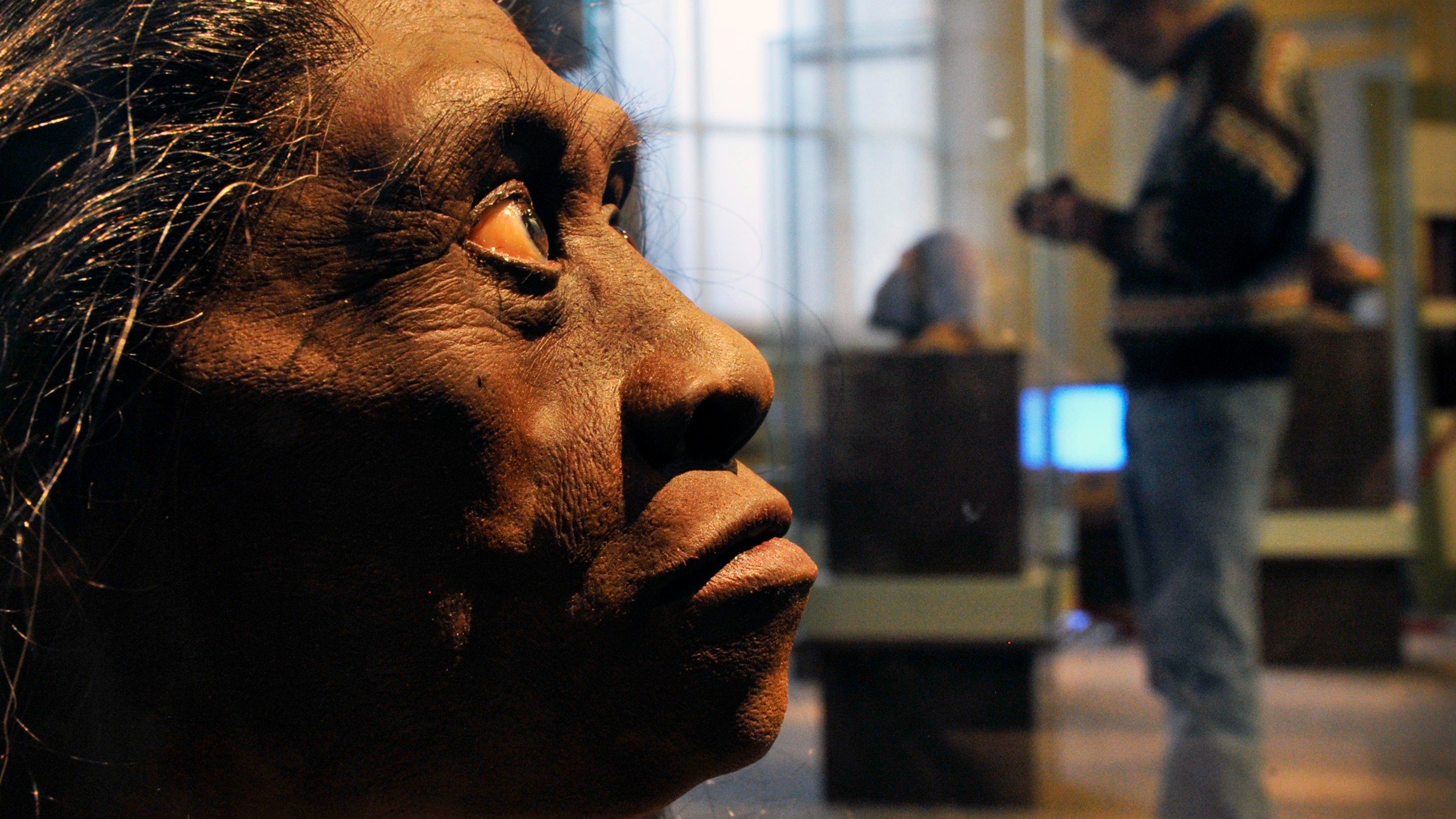
Tiny humans. Extinct now. The “Hobbits” of Flores Island, Indonesia. They didn’t kill their dinner. They scavened what the Komodo dragons left behind.
For over two decades, we’ve pictured Homo floresiensis as surprisingly advanced. A sophisticated hunter-gatherer species arriving on Flores 700,00 years ago. Small stature, sure. Averaging just over 3.5 feet tall with tiny brains and huge teeth. But the evidence seemed solid. Stone tools found at the Liang Bua cave site. Cut marks on animal bones. Even charred remains that suggested fire use.
It painted a picture of complex behavior. The kind we see in our own genus. Homo. They disappeared around 50,0 Where Homo sapiens began expanding into Southeast Asia, pushing them into the dustbin of history.
Or so we thought.
A new study, published in Science Advances on July 3, pulls the rug out from under that narrative. An international team of researchers decided to look closer. Really closer. At the bones of the Stegodon florensis insularis, a dwarf elephant species that also went extinct.
Here is the twist.
The researchers wanted to know who made the marks on those bones. Did the Hobbits slaughter the elephants? Or did they clean up after the island’s other top predator, the Varanus komodensis, commonly known as the Komodo dragon.
To answer that, they fed a goat carcass to a live Komodo dragon at Zoo Atlanta*. Yes. They watched a lizard eat a goat. Then they cataloged every pit, notch, and furrow the teeth left behind.
The result?
Dragon teeth leave specific signatures. Concentrated heavily in fleshy areas. The predators want meat. They go for the rich, protein-dense cuts.
Then the team examined the ancient Stegodon bones from Liang Bua.
They found 54 tool-inflicted cut marks. They found nearly twice that number of tooth marks from Komodo dragons.*
The placement told the real story. Dragon teeth marked the meaty bits. Human cut marks appeared mostly on bones where little flesh remained.
The Hobbits weren’t killing elephants. They were picking bones. Scavengers, secondary accessors. Eating what the dragons refused to touch.
“A combination of mostly primary access by Komdo dragons and secondary access by H. floresiensis,” the researchers wrote.
And there’s another blow. No fire.
The previously reported charred bones? The mice? It wasn’t cooking heat. It was manganese staining. Natural geological discoloration that looks like fire damage to the untrained eye.
No cooked food. No hunting kills.
This changes everything we think we know about their capabilities. It suggests H. floresiensis was far less behaviorally complex than the stone tools alone implied. Which brings up the uncomfortable question. Where did they come from.
E. Grace Veatch, a Paleoanthropologist at the University of Tu’bingen, thinks this points to a deeper divergence. Perhaps the ancestor of the Hobbit split from the Homo line before hunting and fire control were ever invented.
Island dwarfism is the standard explanation for their size. Limited resources shrinking bodies over generations. But Veatch argues that the behavior matters just as much.
“I think our study highlights the importnace of considering behavior in these debates,” she says. The evidence suggests they evolved from an early hominin group that never needed those high-level dietary strategies.
It doesn’t solve the puzzle. Not even close.
We know shockingly little about early humans in Southeast Asia. Homo erectus lived in Java and other parts of Sunda, a landmass exposed between the South China Sea an d Indian Ocean off and on for 2.6 million years.If the Hobbits descended from erectus, something weird happened on that isolated rock.
Adam Brumm, an archaeologist unaffiliated with the study, sees the loss of skill as a feature, not a bug.
“Flores was clearly a wild an d in the story of early hu an evolutionary tale, the sort of pl ac where almost an ythng could have h an ned—including, potential y, th loss of dee y-rooted h an ne an n behaviours, such s hun ing an d fire use.”
Profound anatomical changes? Check. Smaller body, smaller brain. Behavioral regressions? Also possible.
Where do they fit in the tree of Homo? Still no solid answer. The gap is wide. Open. Veatch insists this is why taphonomy—the study of what happens to things after they die—is so valuable.
The bones speak. Just not in the voice we wanted them to use. They tell us these small, strange people were vulnerable. Dependent on the leftovers of lizards. Living in the shadow of dragons.
Does that make them less human? Or just differently human.
The record is thin. The island is gone, buried or changed. The animals are extinct. All we have are fragments of bone and scratches on surface. Maybe that’s enough. Maybe it’s not.
The mystery deepens. Not solves.