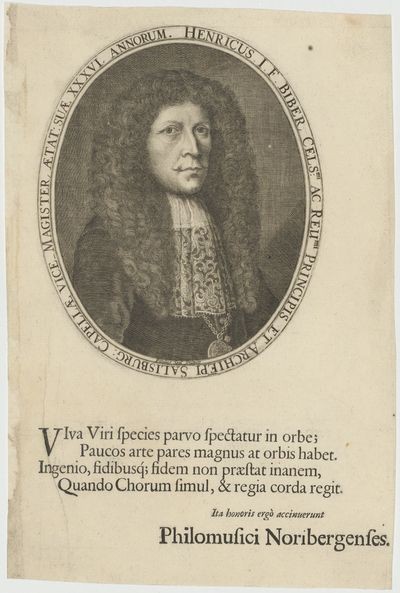
Heinrich Biber didn’t just play the violin. He broke it. Or at least, he broke the rules of how it was supposed to be tuned, played, and respected. Born in Bohemia in 1644 and dying in Salzburg in 1704, Biber was one of the most technically advanced violinists of the Baroque era. Yet, for centuries, he was largely forgotten. Now, thanks to a massive revival of interest in Baroque performance practice, his name is back. But why does he matter? Because he pushed the instrument further than anyone before him.
How Biber Rose from Valet to Kapellmeister in Salzburg
Biber’s career wasn’t a straight line. It was messy, ambitious, and legally questionable at times. He started in 1668 as a valet and musician for the bishop of Olomouc in Kroměříž. Two years later, he left without permission. Yes, he basically quit his job and ran away to join the service of the Archbishop of Salzburg.
He still sent music back to Kroměříž, which is why most of his manuscripts still sit in the Czech Republic today. But in Salzburg, he climbed the ladder. Fast.
- 1670: Valet
- 1679: Deputy kapellmeister
- 1684: Kapellmeister and dean of the choir school
By 1690, Emperor Leopold I ennobled him. That’s a big deal. It meant he wasn’t just a worker; he was aristocracy. But he never toured. He didn’t need to. His reputation spread through his scores, not his stage presence.
Where the Mystery Sonatas Fit Into Baroque History
If you are looking for the single most important reason to listen to Biber today, it is the 15 Mystery Sonatas (also called the Rosary Sonatas ). Written for solo violin and continuo, these pieces are based on events in the life of Mary. Each sonata corresponds to a mystery of the Rosary.
But here is the twist. Biber used scordatura. This is the practice of retuning the violin strings to unusual pitches. It wasn’t just for show. It allowed for new chords, weird resonances, and technical effects that standard tuning couldn’t achieve. He also used natural harmonics to create ghostly, high-pitched sounds.
Biber showed that the violin wasn’t just a melodic instrument. It was a sound effect machine.
He also wrote the Passacaglia in G Minor, a piece for unaccompanied violin that is technically brutal. It demands everything from the player. It is dense, complex, and utterly compelling.
Why Biber’s Sacred Music Was So Ambitious
Salzburg Cathedral was huge. Biber had a lot of people to work with. He didn’t just write for a quartet. He wrote for large instrumental and choral forces. In 1682, he composed the Missa Salisburgensis for the 1,100th anniversary of the archbishopric.
He placed seven divided ensembles in different parts of the cathedral. The sound would bounce off the stone walls, creating a spatial audio experience long before surround sound existed. It was dramatic music. Sacred music. And it required mastery of counterpoint and variation techniques.
He also wrote operas. At least two survive, though only one is well-known: Chi la dura, la vince (1687). The title translates to “They Who Endure Will Win.” Given his own career trajectory, it feels almost autobiographical.
The Biber Musical Dynasty
Biber didn’t stop at his own success. He built a family empire. He and his wife, Maria Weiss, had four surviving children. Three became musicians.
- Anton Heinrich (1679–1742): Violinist at the Salzburg court.
- Karl Heinrich (1681–1749): Also a violinist, eventually became kapellmeister.
- Maria Cäcilia (born 1674): Entered a convent.
- Anna Magdalena (16