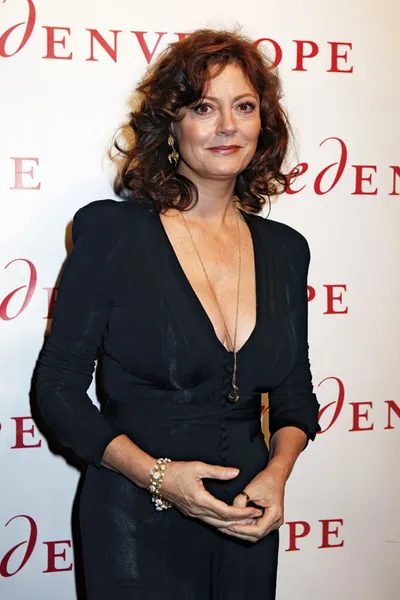
Susan Sarandon was born on October 4, 1946, in New York City. She is an American film actress who stopped playing shallow, sexy characters and started delivering work with real emotional weight. This shift defined her career. For years, her early roles were defined by sensuality rather than substance. She outgrew those parts. By the mid-90s, she was recognized for versatility and depth. Her breakthrough came with Dead Man Walking in 1995. She played a nun who counsels death row inmates. The role was not glamorous. It was engaging. She won the Academy Award for Best Actress in 1996 for this performance.
Breaking the Typecast
Early in her career, Sarandon was often cast as the beautiful, sensual woman with little depth. Critics and audiences saw this pattern. She refused to stay in that lane. The transition required effort. It required choosing roles that demanded more from her psyche and technique. The result was a career that expanded significantly. She proved she could handle complex characters. This change did not happen overnight. It was a deliberate move away from typecasting. The industry took notice. Her performance in Dead Man Walking solidified this new direction. The Oscar win was the industry’s way of acknowledging her range. It confirmed she was no longer just a looker. She was a serious actor.
How Susan Sarandon’s Career Shifted From Cult Icon to Political Activist
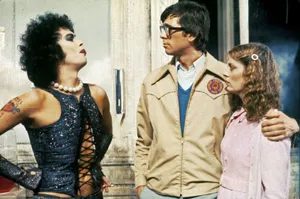
Susan Tomalin didn’t start out as Sarandon. That surname stuck after a marriage to fellow Catholic University of America student Chris Sarandon, who lasted from 1967 to 1979. She kept the name. It worked. By then, she already had a drama degree and had been grinding through modeling gigs and small TV roles, including a stint on the soap opera A World Apart. But the real break came in 1975. She stole the show as the ingenue in the cult phenomenon The Rocky Horror Picture Show. She also held her own opposite Robert Redford in The Great Waldo Pepper.
Louis Malle changed the trajectory. They were romantically involved, and he directed two films that put her on the map: Pretty Baby (1978) and Atlantic City (1981). In both, she played women initially viewed as mere objects of male desire. They weren’t. They revealed sharp intelligence and fierce independence. The performance in Atlantic City earned her first Oscar nomination. It was the kind of role that proved she was more than just a pretty face. She followed up with a modern-day Ariel in Tempest (1982) and a scientist-turned-vampire in The Hunger (1983). Neither film matched the acclaim of her earlier work, but neither erased it either.
Why Bull Durham Made Her a Star
If Rocky Horror made her a cult figure, Bull Durham (1988) made her a star. She played a sultry literature instructor in the romantic comedy. It was a pivotal role. The film didn’t just showcase her talent; it introduced her to Tim Robbins. They began a family. Their relationship endured for decades. They became known as active promoters of leftist causes, using their platform to push for political change. This wasn’t just about fame. It was about consistency. From her early days in Washington D.C. to Hollywood’s highest levels, she maintained a distinct voice. That voice grew louder with each project. The political activism didn’t replace the acting. It framed it. How many actors manage to sustain both a prolific career and a consistent public stance for thirty years? Few. She was one of them. The legacy here isn’t just the awards or the box office numbers. It’s the endurance. It’s the ability to remain relevant while staying true to a specific set of beliefs. The industry moves fast. Trends vanish. But the core of who she was—intelligent, independent, unyielding—remained. That’s harder to replicate than a hit movie.
The Late-Career Renaissance
By the time she hit her late sixties, Sarandon wasn’t slowing down. If anything, she was getting better at picking projects that let her stretch.
In 2012, the late-career film roles of Susan Sarandon became a study in variety. She turned up as a sharp-tongued librarian in Robot & Frank. Then came Arbitrage, where she played a wife unraveling because of her husband’s lies. She was also in The Company You Keep, playing a housewife dragged back into the spotlight by her radical past. And if that wasn’t enough, she wove through multiple timelines in the ambitious Cloud Atlas.
The next year, she took on a tough-as-nails district attorney in Snitch. She also squeezed into the messy family farce The Big Wedding. By 2014, she was Tammy’s alcoholic grandmother. It was a funny role. A supporting one. But she held it down.
Then came 2015. Two very different movies. In About Ray, she was the supportive lesbian grandmother of a transgender teen. Acidic. Funny. Real. In The Meddler, she played a smothering mom who just couldn’t stay out of her daughter’s business. Critics loved the sincerity. It worked.
She didn’t stop there. She showed up in A Bad Moms Christmas (2017) as the ultimate troublemaking parent. Then, in Viper Club (2018), she played a mother who turns to an underground network when her journalist son gets kidnapped in Syria. It was intense. Grounded.
Her recent credits keep adding up. The Jesus Rolls (2019) brought her back to the world of The Big Lebowski. She voiced a character in the animated Fearless (2020). And in Ride the Eagle (2021), she played a mom estranged from her son. A dramedy. A quiet return to form.
Television Turns
Her filmography isn’t the whole story. Television has been a steady companion.
She popped up on Friends. And ER. Recurring roles on Rescue Me and The Big C gave her room to breathe. But the big TV moments? Those came later.
In 2006, she played tobacco heiress Doris Duke in Bernard and Doris. An HBO movie. A strange pairing. Two years later, she was in You Don’t Know Jack. Another HBO film. This one looked at Jack Kevorkian. The doctor who advocated for physician-assisted suicide. Sarandon played his wife. It was heavy. Important.
Then 2017 hit. The anthology series Feud. Season one was Bette and Joan. Sarandon played Bette Davis. Jessica Lange was Joan Crawford. It was a clash of titans. On screen. In person. It dominated the cultural conversation.
She also joined the cast of Ray Donovan from 2017 to 2019. A recurring role. A familiar face in a gritty world.
The Personal Side
All this work. All this noise. But there’s a quieter side to her life.
Sarandon is known for being loud in her politics. One of Hollywood’s most vocal liberals. She doesn’t hide it. She lives it.
She has three kids. Eva Amurri. From her relationship with Italian director Franco Amurri. Then John (“Jack”) Henry Robbins and Miles Robbins. Both from her time with Tim Robbins.
It’s a complicated life. A public one. Private in ways that matter.