A Volcanic Amount Of Smoke
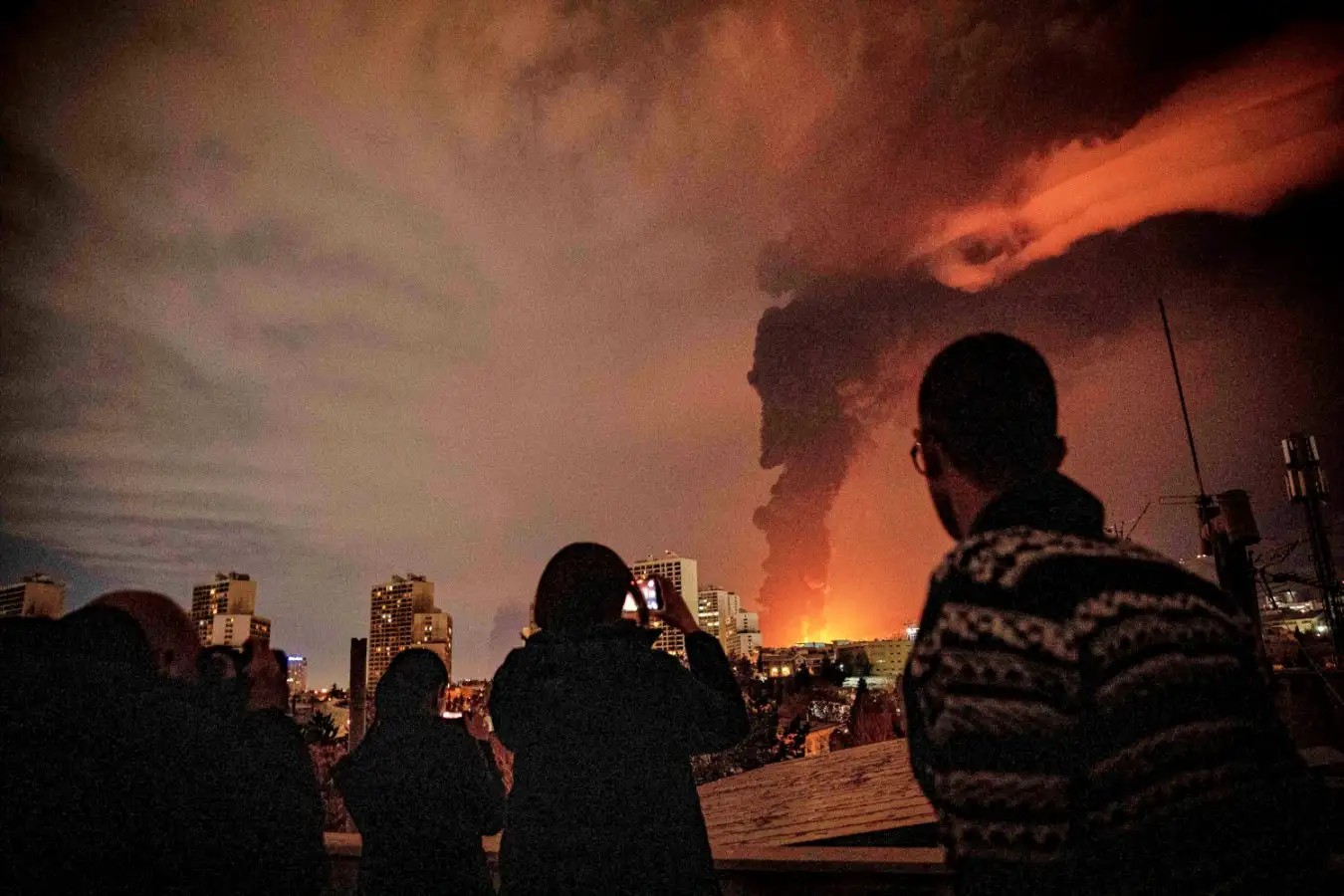
Israel hit Iranian oil facilities on March 7. The strikes targeted depots and refineries near Tehran. Massive fires ignited instantly. Black rain fell on the capital. Residents felt it immediately. It burned their eyes. It scratched their skin. Breathing became difficult, heavy work in the sudden haze.
Satellites caught the plume. Chinese data specifically. A new generation of Fengyun-3 spacecraft watched it all unfold. The sulphur dioxide spread fast. It covered 300,0 dump000 square kilometres. It crossed borders with ease. Turkmenistan got hit. So did Uzbekistan. Kyrgyzstan and Kazakhstan watched it pass. Then China.
How bad was it? Bad.
Zhenping Yin at Wuhan calculated the numbers. Roughly 29,000 tons of sulphur dioxide. Think of Iceland’s Eyjafallajökull volcano in 2010, remember? The ash that grounded Europe’s planes. This event emitted 40 percent more sulphur dioxide than that volcano did per day. It lasted only one or two days. A spike, brief but violent.
Health Hazards Across Borders
“Although the major emission event lasted one to two days, we shouldn’t neglect the regional atmospheric impact.” — Zhenping Yin, Wuhan University
The concentrations were high. Too high. Sulphur dioxide doesn’t just sit there. It mixes with hydrogen and oxygen. It turns into sulphuric acid. You get smog. You get acid rain. London knew this back in 1952. Coal burning killed 12.000 people during the Great Smog there. This modern event isn’t quite that old-school industrial, but it shares the chemistry.
Yin warns about water. Rain can wash those pollutants into agriculture. Into drinking sources. The contamination risk is real.
Lucy Carpenter from the University of York sees a different danger lurking. It isn’t just the gas. Oil burning releases soot. It releases heavy metals.
She notes that sulphur dioxide often travels with nastier company. Nitrogen oxides? Probably there. Polycyclic aromatic hydrocarbers? Likely. Unburnt benzene? Almost certainly.
These things cause cancer. Long-term exposure does. Three days might not be enough time to trigger a tumor. Carpenter isn’t sure about the ground-level concentration, since the satellites look at the entire column of the atmosphere. But acute attacks are another story.
Asthma sufferers could have gone into distress. Older people? They might have suffered heart attacks. Strokes too. The distance traveled doesn’t matter for the immediate danger. Wind moves the toxins fast. Over thousands of kilometers.
“That amount in a single fire has huge health implications… over thousands of kilometres,” says Carpenter.
For comparison, some clean coal plants in rich countries emit far less than this attack. Without scrubbers, though? Those plants can pollute worse. Still, dumping 29.000 tons in a single night is extreme. Twenty times what a decent plant does in a year.
Watching The Sky
The Fengyun-3 constellation works quickly. Three hours to provide data on atmospheric concentrations. Speed matters when disasters happen.
Yin says this helps disaster response. Early warnings for areas downstream. The plume lasted only about three days. The immediate crisis might pass. But the air remembers. And people living downwind breathed it all anyway.