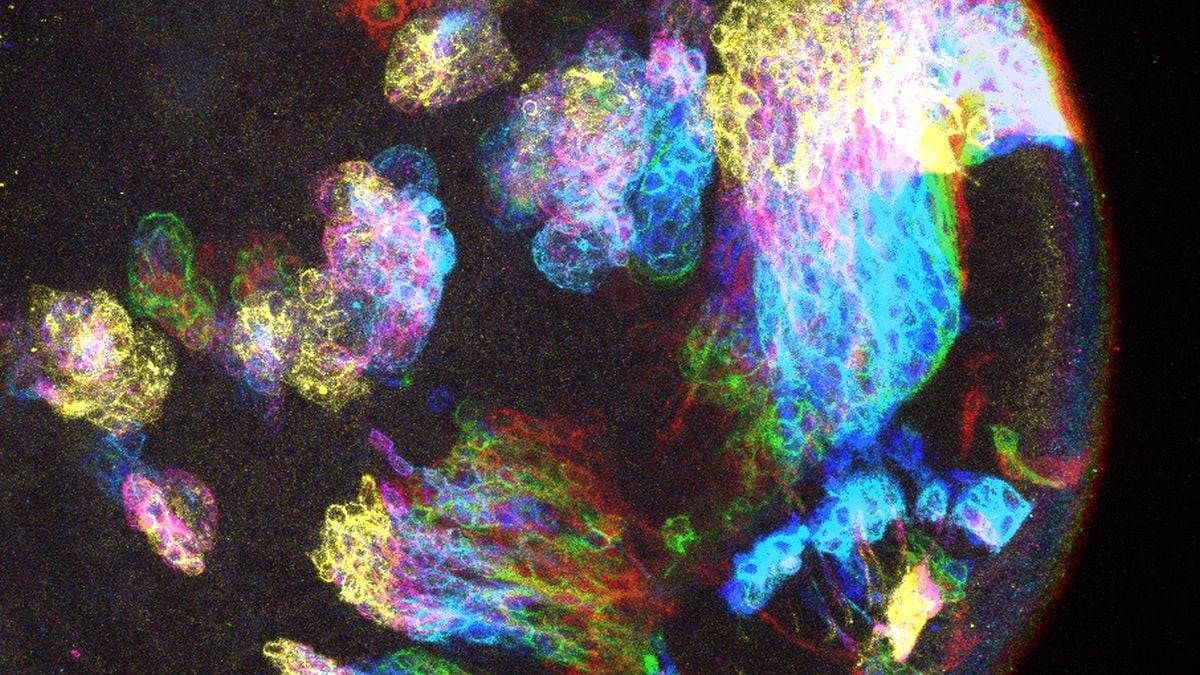
Not all brain tissue is equal when it comes to turning malignant.
Decades of clinical data show this. Tumors don’t pop up randomly. They cluster.
Glioblastomas? They love the cerebral hemispheres. Medulloblastomas? The cerebellum in kids. It’s a pattern doctors have watched repeat for years.
Scientists always suspected that certain brain regions are just vulnerable. Soft targets, essentially. But nobody knew why.
Now fruit flies have something to say about it.
It sounds odd. Insects and humans, brain-to-brain. But fly central nervous systems follow many of the same发育 (developmental) rules as ours. They’re the gold standard for studying how neural cells behave when things go wrong. We can’t experiment on living human brains easily, but we can edit flies.
Louise Cheng, an oncologist at Peter MacCallum Cancer Centre, leads this team. She notes that our bodies deal with cancer-causing mutations all the time.
Most fail. The immune system spots the bad actors. Removes them. Game over.
The puzzle is the escapees.
Why do some mutated cells slip through? Why only in specific zones?
To test this, the team tweaked the flies’ genes. They forced mature neurons to regress into stem-like cells. Cells that divide without stopping. Classic tumor behavior.
The flies got full of these abnormal proliferating masses.
Except they didn’t everywhere.
Here’s the kicker.
The abnormal stem cells showed up across the entire central nervous system. Everywhere.
But tumors? They only persisted in certain regions.
Something protected other parts. A difference in soil, if you will, rather than the seed.
Previous studies flagged a protein named Chinmo. It helps regulate stem-cell development. The team checked the levels.
In the central brain? Tumors grew. Chinmo was present.
In the optic lobes? No tumors. And zero Chinmo.
Coincidence? Probably not.
So they played God with the levels. They dialed Chinmo down in tumor-prone zones. Turned it up in the safe optic lobes.
The results were dramatic.
Kill the Chinmo signal. Stop the tumor growth. Boost it? Sudden proliferation where it hadn’t happened before.
“We found we could change the fate of.cells carrying the exact same mutation by. turning Chinmo. on or off”
Same mutation. Different outcomes. Entirely dependent on the environment. The cellular context matters. The location matters.
Do we have Chinmo? No.
Humans lack this specific protein. It’s not a direct manual for our medicine.
But the principle sticks. Biology is likely steering us. Identifiable factors might make one brain region a target and another a fortress.
Why do we assume mutation is the whole story? It’s never just the mutation. It’s where the mutation lands. And who’s watching it.
Cheng believes this shifts the perspective. Instead of just chasing mutations, maybe we can target the conditions that allow them to flourish.
Stop the environment before it becomes a home for cancer.
That’s the goal. Hard to do. But it’s a direction.