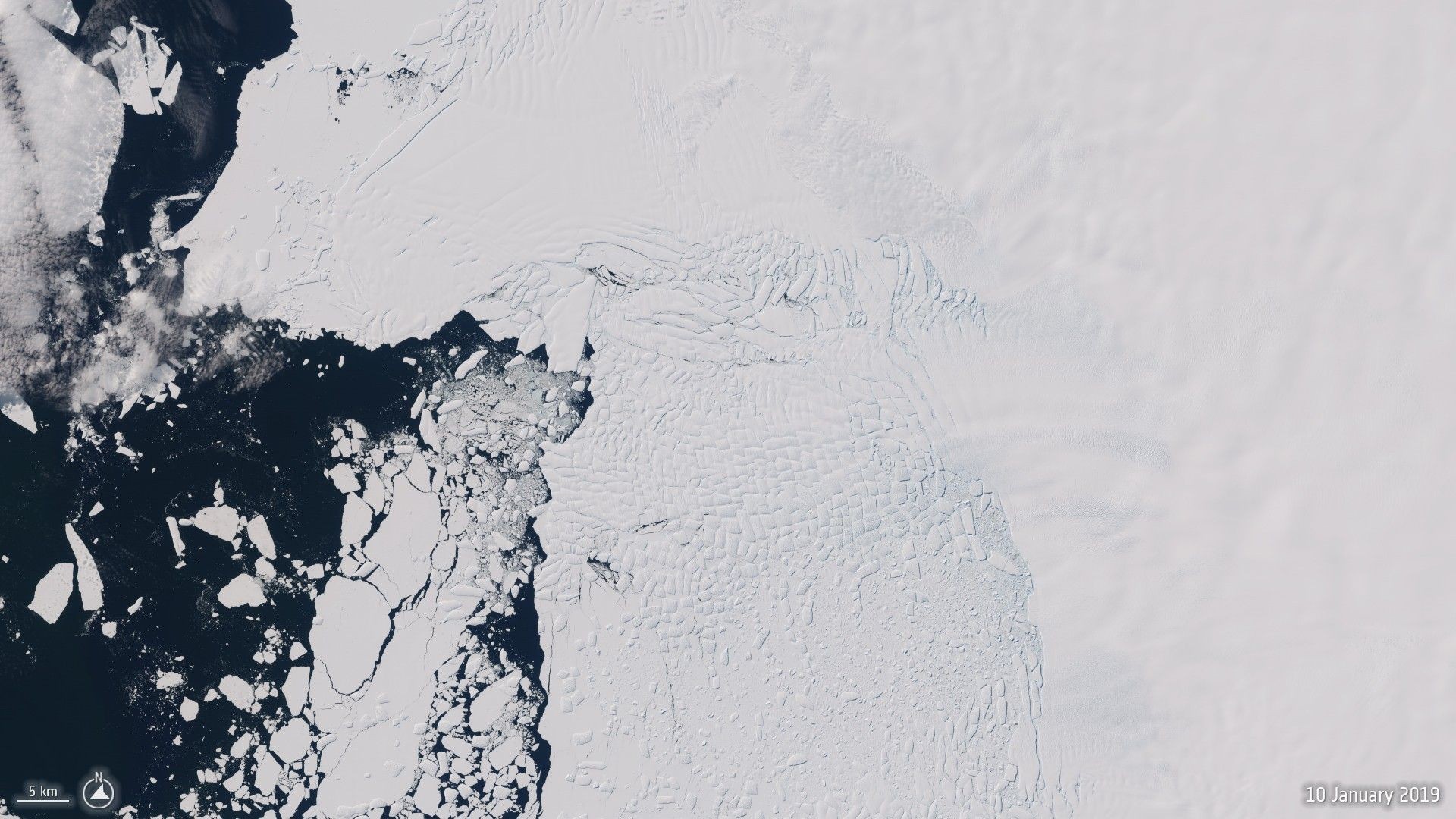
Antarctica’s “Doomsday Glacier” is shedding its last line of defense. An ice shelf that has long acted as a floating barrier against warm ocean water is breaking apart. This will happen soon. Likely within the year.
Thwaites is already melting. But this shelf held it back. It was a buttress. Now that support is crumbling. Robert Larter, a geophysicist at the British Antactic Survey, says he has effectively written the shelf’s obituary. He runs the U.K. side of the International Thwaites Glacier collaboration. A joint effort between American and British scientists to study this rapidly changing beast.
The structural collapse
Satellites show the cracks growing. The shelf is tearing away from the main glacier body. It feels fragile.
When that last bit disintegrates, the grounded ice behind it will likely speed up. Larter notes that parts of the glacier have already accelerated as the shelf weakened. The restraint is gone.
Is it hot water? Yes.
Warm water from deep in the Southern Ocean circulates onto the continental shelf. It melts the ice from below.
This started accelerating in the mid-20th century. The water source sits hundreds of meters down. But it reaches the glacier’s roots. Human-forced climate change alters the wind patterns above. Those winds drive the ocean currents. It’s a messy chain of causality but the link is clear. The wind pushes the heat. The heat melts the shelf.
A fitting nickname?
Researchers didn’t love the name at first. “Doomsday” feels like clicking. It prejudges the outcome. Larter admits they resisted it when the collaboration started eight years ago.
But the data keeps piling up. He now thinks the nickname is appropriate. The glacier is probably going to be lost entirely.
When?
Nobody knows exactly. Models disagree. The timeframe remains the big unknown variable. Everyone involved expects the retreat to continue. But predicting the speed over the next century? Impossible. Too much uncertainty.
Small millimeters. Big consequences.
Here is where it gets tricky to explain. Global sea levels are rising about 4 to 4.5 millimeters a year. That sounds negligible. People yawn.
Don’t yawn.
A small rise changes everything locally. Just a meter or two of sea level rise turns a rare “once in a century” flood into an annual annoyance. Coastal cities in places like Miami, Boston, and San Francisco are facing hard choices about infrastructure right now. We are building for today but planning for a higher tide.
You don’t need catastrophic rising oceans to ruin your property values. Just a shift in frequency. From rare to routine.
The shelf breakup is visually dramatic. Spectacular even. Satellite imagery will show fragments drifting away. But the real story is the response of the massive glacier behind it.
The commitment
This isn’t something we can fix with net-zero emissions by 2050. If Larter is right—and he probably is—the loss is locked in. Thwaites will contribute 65 centimeters (about 26 inches) to global sea levels. That is a massive addition.
Worse yet.
Thwaites sits on bedrock far below sea level. Its neighbors do too. Losing Thwaites destabilizes the whole West Antarctic Ice Sheet. There is a total commitment of over 3 meters of sea level rise there.
Will that happen soon?
No. It won’t be our grandchildren’s headache. Maybe their grandchildren’s. But the ice is moving. The shield is down. And there’s no putting it back together.