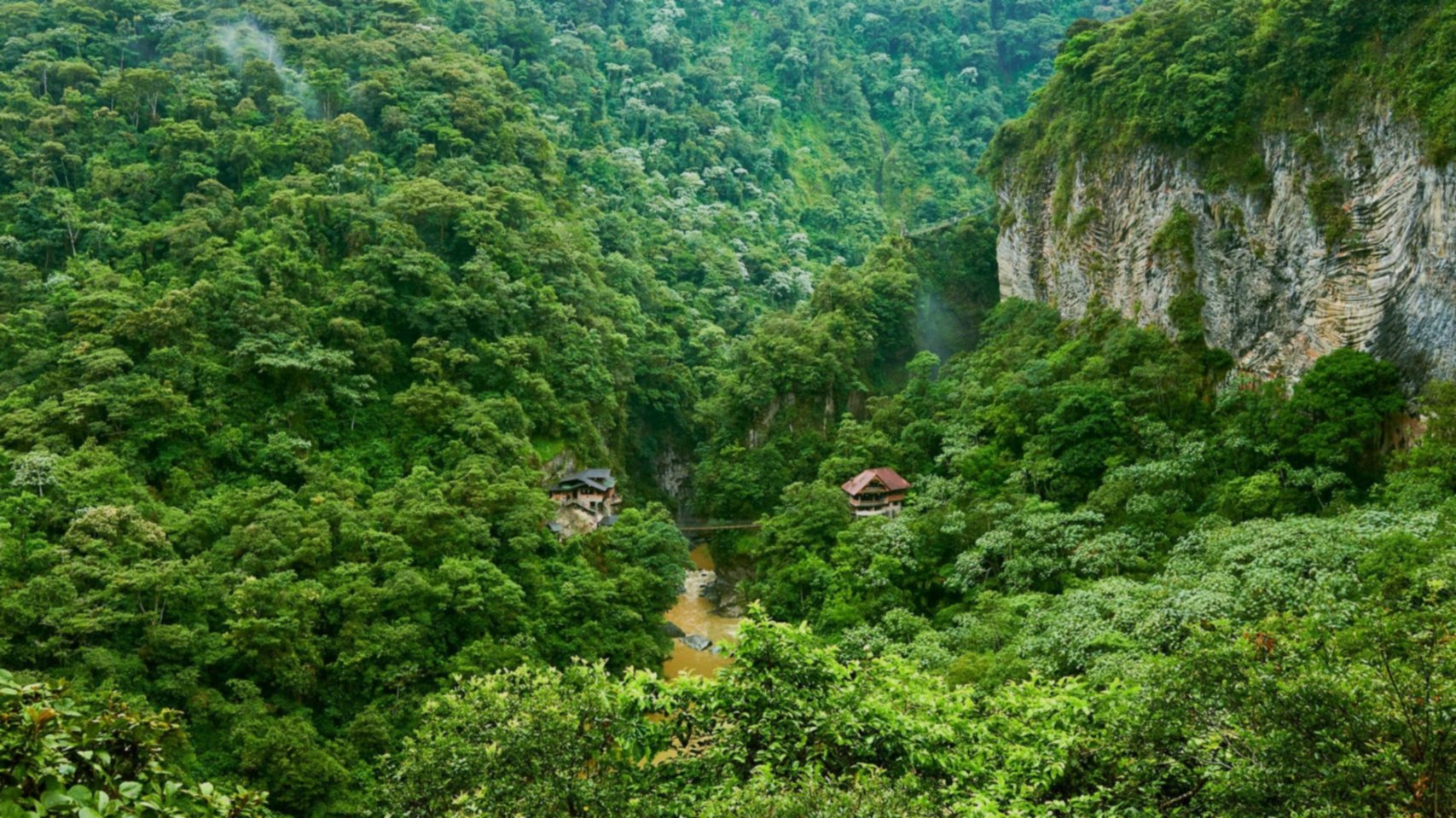
Tropical forests usually pull carbon from the sky. They hoard it. Store it away like dragon gold.
Take the Amazon. It’s got 123 billion tonnes of carbon locked up in wood and roots. That is more than any other land-based system on Earth. A massive buffer. But right now the buffer is cracking.
We know this because I spent years watching trees. Or rather my team of 100-plus researchers and I did. Back in 2023 we published some grim data. South American forests aren’t just struggling. During an El Niño they might completely stop sucking in carbon. They cease to be a sink.
El Niños are the warm phase of natural climate shifts. Unpleasant ones.
Here is the kicker. These events are getting nastier. Twice as many “very strong” El Niños have hit in the last 60 years compared to the 60 years before. The NOAA confirms one is happening now. It is underway.
How does the forest die?
Photosynthesis needs two things. Sun. And water. Actually three. CO2 too. But the intake valve is the leaf pores. When it gets hot and dry plants clamp down on those pores. They want to save their water supply. Problem is you shut off the carbon flow. The tree starves. No carbon means no growth. Just slow decay.
In El Niño years temperatures spike. Stress mounts. Trees die. Then they rot. The carbon they hoarded? Released back into the atmosphere. Decades of storage gone in a rot cycle.
We looked at the 2015–2016 event. Land temps were at least one degree hotter than normal. Guess what happened. Parts of the South American tropics just… stopped absorbing carbon. It sat there. Idle.
To figure this out we measured over half a million trees. Across six countries. For thirty years. Just us. With tape measures. Over 4,000 species. We tracked growth to calculate aboveground biomass. The weight of the living carbon.
It wasn’t even. Not every forest is doomed yet. It depends on the baseline climate. People think “rainforest” means perpetual monsoon. It does not. Many tropics have dry seasons. The edges of the Amazon? They bake.
Those edge forests were the worst hit. Trees there already deal with low water. When the heat hits they panic. For every 0.5°C rise in temp these dry forests lost 0.5% of aboveground carbon. It adds up. Fast.
But it was the big guys who suffered most.
Small trees survived better. Large ones? Those over 20cm wide saw mortality rates double. From 1.8% to a full 3% per year. That is a lot of wood turning dead.
Why the giants?
It wasn’t just slow starvation. It was hydraulic failure. Imagine the tension inside a tree. When the air demands moisture the internal water column snaps. Like a rubber band stretched too far. Pop. The big tree dies instantly. Dense wood didn’t matter. The physics beat them.
Can seasonal adaptation handle this?
Probably not.
Climate extremes are pushing these edge forests past their breaking point. It’s catastrophic carbon loss. And 2024? Or maybe 2025. The danger looms larger.
Scientists say 2026 might break heat records. But the current El Niño is unusual. Oceans were already warm before it started. Air was already hot. It didn’t need to ramp up to cause damage. It was loaded for bear.
The Amazon edges have seen the highest warming in decades. The forests are tired. They haven’t recovered from past multi-year stresses. Then another hit lands. Compounding. Brutal.
We risk tree losses on a scale we’ve never seen.
The Amazon’s future hinges on protection. On limiting global temp rise. It hinges on us not letting it become a source instead of a sink.
Once-reliable allies. Now fragile.
If these forests flip? If they start giving back the carbon they’ve held for millennia? That accelerates the crisis. We lose our best natural ally in the climate fight.
We need to protect them. Not for the trees alone. For the air we breathe. The balance is delicate. Delicate things break easily.
We are breaking them.