We always thought Neanderthals were everywhere. Spread out. Varied. That’s a myth now.
DNA from the past says something else. It tells a narrower story. A darker one, really.
They nearly went extinct. Twice.
First around 75,00 years ago. Then again right before they vanished. And yet… here we are with these fragments. Bones. Teeth. Memories encoded in mitochondria.
The Great Retreat
Cosimo Posth led the charge at the University of Tüpingen. He wanted to know why they died. But first he had to know who survived.
His team looked at late Neanderthals. The ones lingering from 60,000 down to 40,000 BCE. Before that? Fog.
Posth calls the early record fragmentary. We know they were here for 360,00 years. But the middle is blank.
So he looked at the end game.
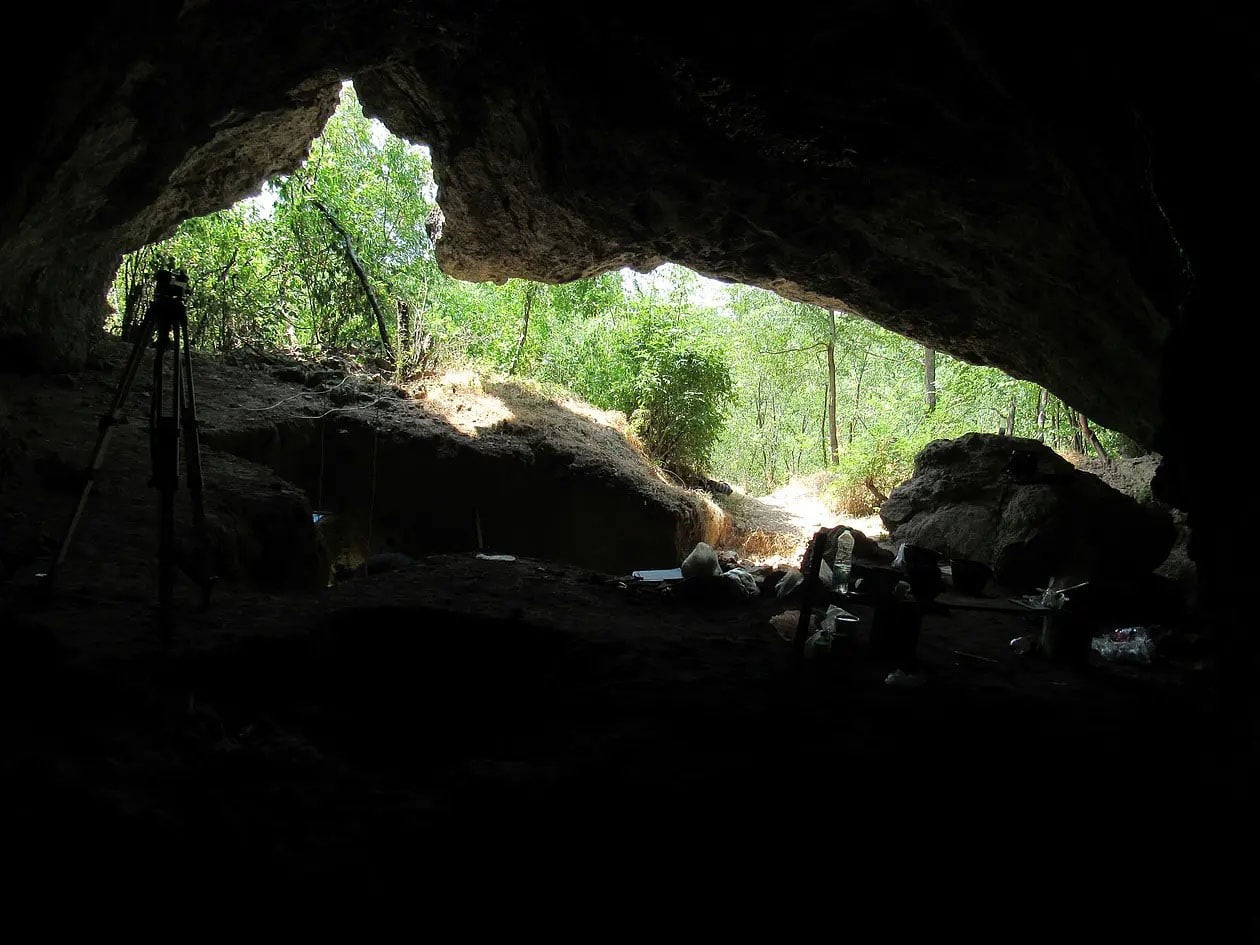
The findings came from ten new individuals. Rare bones pulled from caves in Belgium. France. Germany. Serbia. Added to forty-nine others already on file.
That’s it.
Just fifty-nine data points.
From these shards of the past they rebuilt the timeline. It wasn’t gradual. It was sudden.
“Our data enabled us to reconstruct geographically where they went,” says Posth.
Southwestern France.
Around 75,00 BCE the Ice Age slammed down on Europe. Cold. Hard. Sites dried up. The map shrank. Most Neanderthal lines snapped.
One survived.
Tucked away in a refuge in what is now southern France. They huddled there for ten millennia. Waiting. Surviving. Then around 65,00 BCE they moved out.
Descendants of that single group spread across the entire continent. From the Iberian peninsula all the way to the Caucasus.
Do you realize how little variation that is?
Nearly all late Neanderthals we’ve studied trace their mother line to those survivors in France.
Genetically speaking they were a clone of one another. Homogeneous. Is that strength? Or a ticking clock?
The Second Drop
The expansion lasted. For a while.
Then another drop hit. Around 45,00 BCE numbers plunged again.
By 42,00 BCE they hit bottom. A low point from which they never rose.
They disappeared shortly after. Humans filled the gap by 40,00 BCE.
It makes sense if you think about it. Small population. Low diversity. No genetic backup. When conditions change you don’t have the variety to adapt. You just break.
Jesper Borre Pedersen helped bridge the gap between stones and genes. Using the ROAD database he tied the fossils to the landscape.
Space and time.
He connected the dots.
The math didn’t support a stable population. If Neanderthal numbers had held steady the DNA would look different. It would be messy. Rich. It isn’t. It’s clean. Too clean.
A signal of collapse.
Maybe that isolation doomed them. Maybe the low diversity made them fragile. Posth suggests it contributed to the disappearance.
But there’s no certainty. Just patterns. Lines of inheritance drawn across ice age maps.
Ten bones. Ten lives. And suddenly a picture forms of how we lost our cousins.