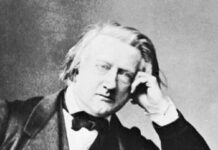
Max Planck changed how we see the universe. Born on April 23, 1858, in Kiel, Schleswig, he grew up to become one of the most important German physicists of the 20th century. He died on October 4, 1947, in Göttingen. His life wasn’t just about equations. It was about standing at the edge of a new era and holding the line.
He studied at the Universities of Munich and Kiel. By 1889, he had become a professor of theoretical physics at the University of Berlin. He stayed there until 1928. During those decades, he looked at problems that others ignored. He focused on the second law of thermodynamics. He studied blackbody radiation. These weren’t just academic exercises. They were the cracks in the foundation of classical physics.
How Quantum Theory Changed Science
Planck’s work led him to formulate the quantum theory of radiation. It was revolutionary. It shattered the idea that energy flowed smoothly like water. Instead, he showed that energy comes in discrete packets. Quanta. This insight earned him the Nobel Prize in Physics in 1918.
But the real key was a number. A tiny, fundamental constant of nature. He discovered what we now call Planck’s constant, h. It determines the size of these energy packets. Without it, modern electronics don’t work. Lasers don’t work. The entire digital age rests on this single value.
“The quantum of action, now known as Planck’s constant, h.”
The Man Behind the Math
Planck wasn’t just a calculator. He was a man of conviction. He championed Albert Einstein’s special theory of relativity when many others were skeptical. He saw the logic. He saw the beauty.
But then came quantum mechanics. Niels Bohr. Max Born. Werner Heisenberg. They introduced a statistical worldview. An indeterministic one. Planck opposed it. He didn’t like the idea that nature was fundamentally random. He wanted certainty. He held onto the old physics even as the new physics proved him wrong. It was a stubborn stance. But it was human.
A Tragic Life in Turbulent Times
Planck’s influence extended beyond the lab. He served as the president of the Kaiser Wilhelm Society. This organization later became the Max Planck Society. He led it until his resignation in 1937.
The rise of Adolf Hitler changed everything. Planck tried to do something impossible. He appealed to Hitler to reverse the Nazi’s devastating racial policies. He failed. The regime was too powerful. Too ruthless.
His personal life collapsed along with his political hopes. His son, Erwin Planck, was implicated in the July Plot against Hitler. The attempt to assassinate the dictator failed. Erwin was executed. A father who tried to save his country lost his son in the process.
Planck’s legacy is complex. He gave us the tools to understand the quantum world. He also lived through the darkest days of the 20th century. He didn’t fix the world. He just measured its pieces.